Undersized AC Symptoms: 7 Signs Your Air Conditioner Is Too Small
Undersized AC Symptoms: 7 Signs Your Air Conditioner Is Too Small
Quick Answer: An undersized air conditioner does not have enough cooling capacity to keep up with your home’s heat load. The most common signs include constant runtime, trouble reaching the thermostat setting, weak cooling in the hottest part of the day, uneven room temperatures, and rising utility bills. A system that is too small may run almost nonstop and still leave the house uncomfortable.
That is what makes undersizing so frustrating: the AC seems to be working all the time, but comfort never quite catches up.
What an undersized AC usually feels like
When an air conditioner is properly sized, it should cool the home in balanced cycles and maintain a stable indoor temperature without running endlessly. When the unit is too small, it struggles to remove heat as quickly as the house gains it.
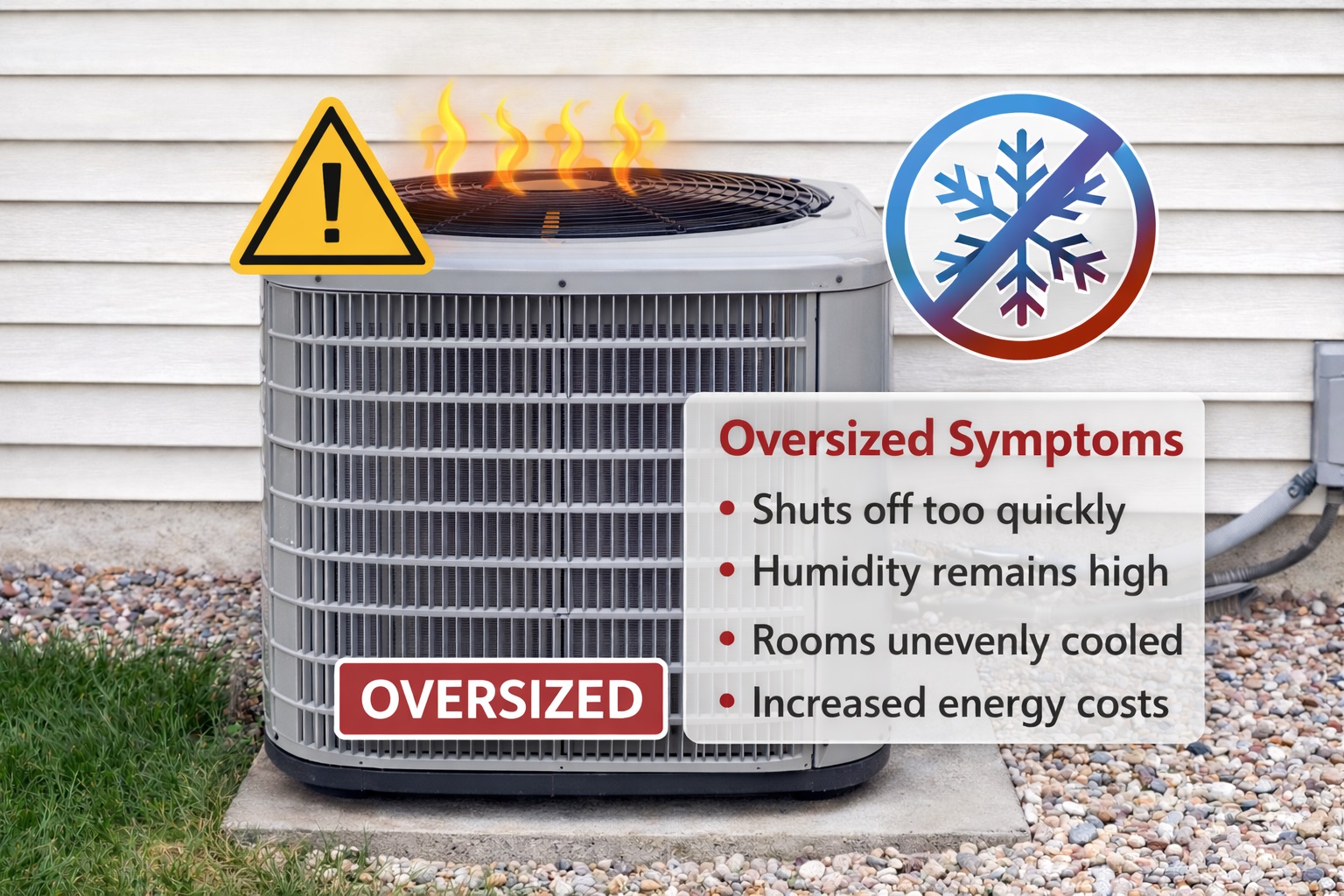
Instead of short bursts of cooling followed by rest, the system may stay on for very long periods and still fail to fully satisfy the thermostat. That is the opposite of what happens with an oversized unit, which cools too fast and shuts off too early. For that comparison, see Oversized AC Symptoms.
1. Your AC seems to run all day
The most obvious sign of an undersized air conditioner is nonstop or near-nonstop operation. If the system rarely shuts off during warm weather, there may not be enough capacity to handle the space.
Some runtime increase is normal on very hot days, but if the AC runs constantly even when conditions are only moderately warm, undersizing becomes much more likely.
If that is the symptom you notice most, also read Why Is My AC Running Constantly?.
2. The thermostat setting is never really reached
A classic example is setting the thermostat to 72°F while the indoor temperature sits at 76°F or 77°F for hours. The AC is running, but the house never fully gets where you want it.
This usually becomes more obvious in the late afternoon, when outdoor heat, sun exposure, and indoor heat gain all peak together.
3. Cooling gets noticeably worse during peak heat
An undersized system can sometimes seem “fine” in mild weather, then fall behind badly once outdoor temperatures climb. That is because the system may be close to adequate under lighter conditions, but not strong enough when the real summer load shows up.
If you want the basic capacity concepts behind this, start with What Is BTU in Air Conditioning? and What Is a Ton in HVAC?.
4. Energy bills keep rising
Many people assume a smaller AC should automatically cost less to run. In practice, an undersized unit can end up using a lot of electricity because it stays on for such long stretches.
Even though the equipment itself is smaller, long runtimes add up. A system that never gets a break may cost more than expected, especially in hot climates or poorly insulated homes.
5. Certain rooms stay hotter than the rest
Undersized systems often reveal themselves through hot spots. The AC may cool the main living area reasonably well, but rooms farther away remain warm or uncomfortable.
Common examples include:
- upstairs bedrooms that stay hot
- back rooms that never cool properly
- spaces with large windows heating up quickly
If the issue is especially noticeable on upper floors, see Why Is My Upstairs Always Hot? once that post is live.
6. The system is under constant strain
When an AC runs near maximum capacity for long periods, internal parts are exposed to more sustained stress. The compressor, fan motor, and electrical components all work harder when the unit has to stay on for hours without enough recovery time.
That does not mean every constantly running AC is undersized, but if the system is clean and working correctly, persistent overload can point to a sizing mismatch.
7. Equipment wear happens faster than it should
An undersized air conditioner may not short cycle like an oversized one, but it still wears down faster in a different way. Instead of repeated startups, the problem is long-term strain from operating near its limits too often.
Over time, that can lead to:
- more frequent maintenance needs
- shorter compressor life
- higher repair costs
- reduced overall system lifespan
If you want to compare this with startup-related strain, read AC Short Cycling Explained.
Why an AC ends up undersized in the first place
Undersizing usually starts with a bad assumption during equipment selection. That can happen when a system is chosen from square footage alone without considering how the house actually gains heat.
Common reasons include:
- incorrect square footage estimates
- home additions without HVAC upgrades
- poor insulation assumptions
- more occupants or appliances than before
- ignoring windows, ceilings, and sun exposure
That is why sizing should never be based only on guesswork. For a broader overview, see Air Conditioner Sizing Guide, AC Size Chart, and AC Size Calculator.
How to tell if the problem is sizing and not something else
Ask yourself these questions:
- Does the AC run for extremely long periods in summer?
- Does the indoor temperature stay above the thermostat setting?
- Do bills rise even though comfort stays poor?
- Does the house cool much better at night than during the day?
If several of those are true at the same time, the system may be too small. If you want a more direct diagnostic angle, read Is My AC Too Small?.
Can you improve an undersized AC without replacing it?
Sometimes you can reduce the symptoms even if you cannot completely solve the core sizing issue right away. Helpful upgrades may include:
- improving insulation
- sealing air leaks
- reducing attic heat gain
- cleaning coils and filters
- improving airflow where possible
Those steps can help the system perform better, but if the unit is significantly undersized for the load, the permanent fix may be replacing it with properly sized equipment.
Frequently asked questions
Is it worse to have an undersized or oversized AC?
Both are bad in different ways. Undersized systems tend to run too long and wear down from continuous strain, while oversized systems often short cycle and control humidity poorly.
Will an undersized AC wear out faster?
Yes, it can. Running near full capacity for long periods puts added stress on major components and can shorten system life.
How long should an AC normally run in summer?
In many homes, normal cycles are around 15 to 20 minutes depending on heat, humidity, and insulation. If the system almost never shuts off, that can be a warning sign.
Bottom line
Undersized AC symptoms usually show up as long runtimes, weak cooling during peak heat, rooms that never feel balanced, and energy bills that keep climbing. The system may appear hardworking, but that does not mean it is correctly matched to the home.
If your air conditioner runs for hours, struggles to hit the set temperature, and still leaves parts of the house warm, the equipment may simply be too small for the load.
Helpful next reads: Is My AC Too Small?, Why Is My AC Running Constantly?, What Is BTU in Air Conditioning?, What Is a Ton in HVAC?, and Air Conditioner Sizing Guide.
Sources and verification
The technical statements in Undersized AC Symptoms: 7 Signs Your Air Conditioner Is Too Small were cross-checked against the primary references below. Final sizing, airflow, electrical, combustion, and refrigerant decisions must also follow the exact equipment instructions and applicable local code.