What Size AC for 2000 Sq Ft House? (3 Ton vs 3.5 Ton)
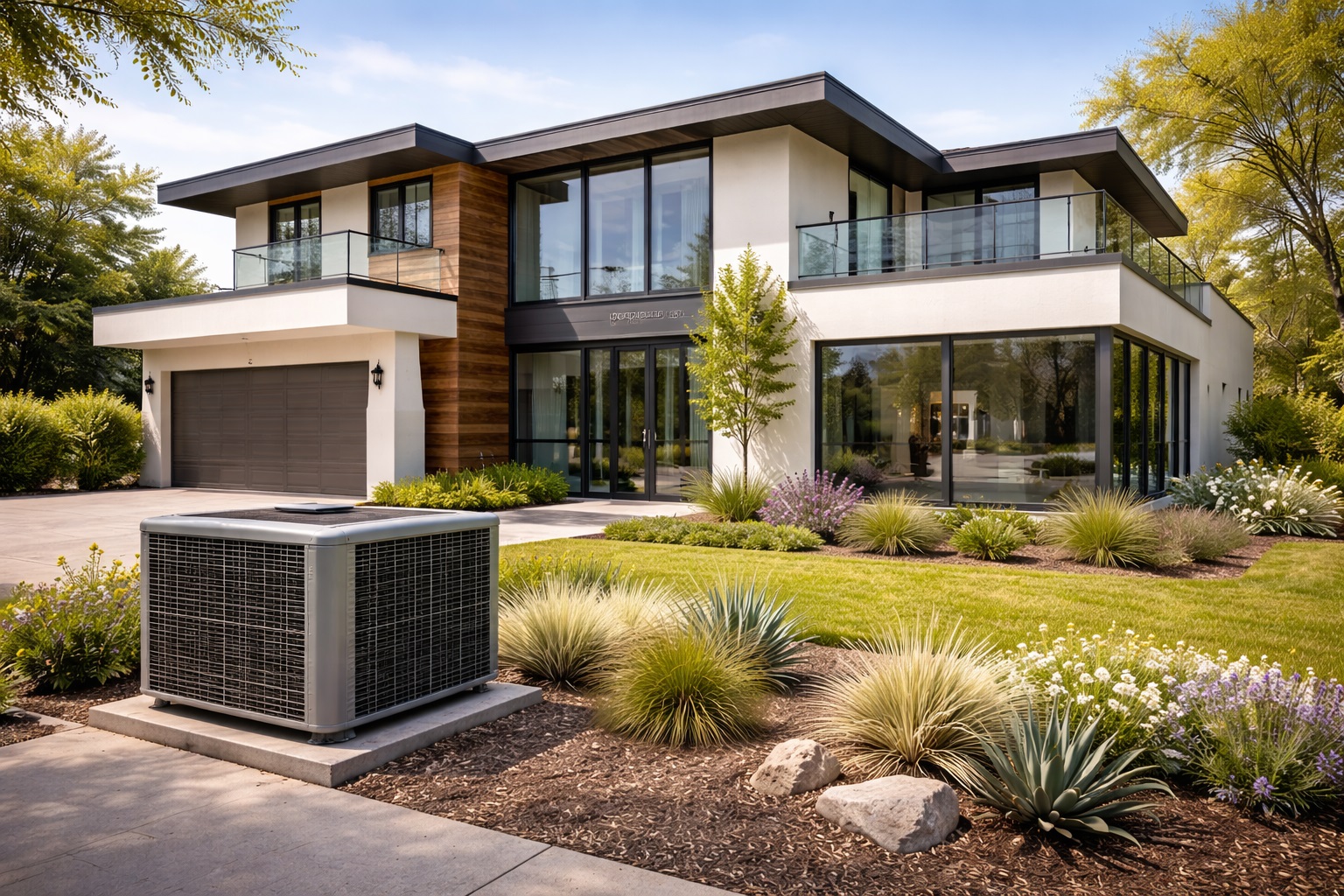
For many 2,000 sq ft homes, a 3 ton AC is a useful preliminary estimate, but the actual cooling load can change with climate, insulation, sun exposure, ceiling height, and ductwork. Homes in hotter climates such as Texas, Florida, Louisiana, or Arizona may require a 3.5 ton AC depending on those conditions.
Many homeowners assume choosing the larger unit is the safer option. In reality, an oversized air conditioner can create comfort problems, humidity issues, and higher operating costs. A properly sized 3-ton system often performs better than an oversized 3.5-ton system installed on undersized ductwork.
If you are unfamiliar with AC sizing terminology, start with What Is BTU in Air Conditioning? and What Is a Ton in HVAC?.
Quick Answer: AC Size for a 2000 Sq Ft House
| Home Condition | Recommended AC Size |
|---|---|
| Good insulation, moderate climate | 3 Ton |
| Average insulation, average climate | 3 Ton |
| Hot climate (Texas, Florida, Arizona) | 3.5 Ton |
| High ceilings (9 ft+) | 3.5 Ton |
| Poor insulation or high sun exposure | 3.5 Ton |
Why 2000 Sq Ft Is One of the Hardest House Sizes to Judge
A 2,000 sq ft home sits directly in the middle of the most common residential AC sizing range. Smaller homes often fit comfortably within a 2.5-ton or 3-ton system, while larger homes clearly require 3.5 tons or more.
- What Size AC for 1800 Sq Ft House?
- What Size AC for 2200 Sq Ft House?
- What Size AC for 2500 Sq Ft House?
3 Ton vs 3.5 Ton AC: What's the Difference?
- 3 Ton AC = 36,000 BTU/hr
- 3.5 Ton AC = 42,000 BTU/hr
A 3-ton unit generally provides longer cooling cycles, better moisture removal, and lower oversizing risk. A 3.5-ton unit delivers more cooling capacity but requires the home and duct system to support the additional airflow.
The Airflow Problem Most Homeowners Never Consider
Most HVAC systems are designed around approximately 400 CFM per ton.
- 3 Ton AC ≈ 1,200 CFM
- 3.5 Ton AC ≈ 1,400 CFM
For a detailed airflow explanation, see How Many CFM Per Ton?.
When Is a 3 Ton AC Usually the Better Choice?
For many 2,000 sq ft homes, a properly sized 3-ton AC system delivers the best balance between comfort, efficiency, and humidity control. Contrary to popular belief, bigger is not always better.
A 3-ton unit is often sufficient when the home has:
- Standard 8-foot ceilings
- Good attic insulation
- Double-pane windows
- Average sun exposure
- Moderate summer temperatures
- Properly sealed ductwork
Under these conditions, a 3-ton system usually runs longer cycles, which improves humidity removal and keeps indoor temperatures more consistent.
If you're comparing tonnage sizes, see 3 Ton vs 3.5 Ton AC and 3 Ton vs 4 Ton AC.
When Does a 3.5 Ton AC Make More Sense?
A 3.5-ton system may be the better choice when the home's cooling load is above average. This commonly occurs in southern climates where air conditioners must work harder for longer periods.
A 3.5-ton system becomes more reasonable when:
- The home is located in Texas, Florida, Arizona, or Louisiana
- Ceilings are taller than 8 feet
- Large west-facing windows increase solar heat gain
- The attic reaches extreme temperatures
- Insulation is outdated or insufficient
- The home has extensive glass exposure
Climate can dramatically affect AC sizing. Compare these state-specific guides:
- What Size AC Do I Need in Florida?
- What Size AC Do I Need in Texas?
- What Size AC Do I Need in Louisiana?
- What Size AC Do I Need in Georgia?
What Happens If You Oversize a 2000 Sq Ft House?
Oversizing is one of the most common HVAC mistakes. Many homeowners believe a larger unit will cool faster and perform better. While it may cool the air quickly, comfort often suffers.
When a 3.5-ton or larger unit is installed in a home that only requires 3 tons, the system may:
- Short cycle frequently
- Fail to remove enough humidity
- Create hot and cold spots
- Increase compressor wear
- Reduce overall efficiency
- Raise electricity bills
Common warning signs include:
- The AC turns on and off every few minutes
- The house feels cool but humid
- Energy costs are higher than expected
- Rooms never feel consistently comfortable
Related guides:
What Happens If 3 Tons Is Not Enough?
Undersizing creates a different set of problems. While the AC may run efficiently, it may never fully satisfy the home's cooling demand during the hottest parts of summer.
Signs of an undersized AC include:
- Long run times during hot afternoons
- Thermostat never reaching set temperature
- Warm rooms furthest from the air handler
- Constant operation during heat waves
- Reduced comfort on upper floors
If these symptoms sound familiar, read:
Why Two-Stage Systems Change the Equation
Many homeowners assume the only choice is between 3 tons and 3.5 tons. In reality, equipment type can be just as important as capacity.
A two-stage 3-ton system can often outperform a single-stage 3.5-ton system because it spends more time operating at lower output levels.
This provides:
- Better humidity control
- Longer runtime efficiency
- Improved comfort
- More stable temperatures
- Reduced short cycling risk
For many borderline homes, this approach offers the best compromise between capacity and comfort.
The Importance of Ceiling Height
Most AC sizing charts assume standard 8-foot ceilings. However, ceiling height directly affects the volume of air inside the home.
For example:
- 2,000 sq ft with 8-foot ceilings = 16,000 cubic feet
- 2,000 sq ft with 10-foot ceilings = 20,000 cubic feet
That's a 25% increase in air volume without any change in square footage.
Homes with vaulted ceilings often require larger systems or more detailed Manual J calculations.
Why Ductwork Matters More Than Most People Realize
Many AC replacements focus only on equipment size. However, the duct system may have a greater impact on comfort than the outdoor unit itself.
Poor ductwork can cause:
- Restricted airflow
- High static pressure
- Reduced cooling output
- Uneven room temperatures
- Excessive noise
Helpful guides:
- Can Bad Ductwork Make Your AC Feel Worse?
- HVAC Return Air Design Guide
- How Many Return Air Vents Do I Need?
How a Manual J Calculation Determines the Correct AC Size
Square footage rules are useful starting points, but they are not a substitute for a proper load calculation. The most accurate sizing method used by HVAC professionals is called a Manual J calculation.
Manual J evaluates:
- Home orientation
- Window size and location
- Insulation levels
- Air leakage
- Local climate data
- Ceiling height
- Occupancy levels
- Duct system losses
Two homes with identical square footage can easily have cooling loads that differ by 20% or more.
Learn more here:
2000 Sq Ft House AC Size by Climate Zone
| Climate Type | Typical Recommendation |
|---|---|
| Cool Northern States | 3 Ton |
| Moderate Climate | 3 Ton |
| Warm Southern Climate | 3 to 3.5 Ton |
| Hot Humid Climate | 3.5 Ton |
| Desert Climate | 3.5 Ton |
State-specific sizing guides may provide more accurate estimates:
- What Size AC Do I Need in California?
- What Size AC Do I Need in Arizona?
- What Size AC Do I Need in Nevada?
- What Size AC Do I Need in Colorado?
Estimated Electricity Costs for a 3 Ton vs 3.5 Ton AC
Many homeowners choose larger equipment because they assume it will cool faster and save money. In reality, operating costs depend heavily on runtime, efficiency rating, and climate conditions.
Under similar conditions, a 3.5-ton system generally consumes more electricity because of its larger compressor and blower requirements.
However, an undersized 3-ton unit running continuously can also increase energy bills.
Related cost guides:
- How Much Does It Cost to Run an AC All Day?
- Why Is My Electric Bill So High in Summer?
- SEER Rating Explained
- SEER vs SEER2
Frequently Asked Questions
Can a 3 ton AC cool a 2000 sq ft house?
Yes. In many homes with average insulation, standard ceiling heights, and moderate summer temperatures, a 3-ton system is sufficient for 2,000 square feet.
Is 3.5 ton too large for a 2000 sq ft house?
Sometimes. If the cooling load is not high enough, a 3.5-ton unit may short cycle and reduce humidity control.
How many BTU do I need for 2000 sq ft?
Most homes require between 36,000 and 42,000 BTU per hour, which equals approximately 3 to 3.5 tons of cooling capacity.
Should I choose 3 tons or 3.5 tons in Florida?
Many Florida homes require 3.5 tons due to high heat and humidity levels. However, insulation quality and ductwork design should always be considered before increasing capacity.
Does higher ceiling height affect AC sizing?
Yes. Taller ceilings increase the total volume of air inside the home and can increase cooling requirements significantly.
Can bad ductwork make a 3.5 ton AC perform worse than a 3 ton AC?
Absolutely. If the duct system cannot deliver the additional airflow, comfort and efficiency may actually decline.
Bottom Line
For most 2,000 sq ft homes, the correct AC size falls between 3 and 3.5 tons. Homes with average insulation, standard ceiling heights, and moderate climates usually perform well with a 3-ton system. Homes located in hotter climates or those with higher heat gain may justify a 3.5-ton unit.
The final decision should never be based on square footage alone. Airflow, duct design, insulation quality, window exposure, humidity levels, and local climate all influence the correct sizing choice.
When in doubt, a Manual J load calculation remains the most accurate way to avoid oversizing, undersizing, and unnecessary operating costs.
Helpful Related Guides
- AC Size Chart
- AC Size Calculator
- How Many BTU Do I Need?
- What Size AC for 1800 Sq Ft House?
- What Size AC for 2200 Sq Ft House?
- What Size AC for 2500 Sq Ft House?
- Oversized AC Symptoms
- Undersized AC Symptoms
Related technical guides
- If the conditioned floor area is near another bracket, compare What Size AC for 1600 Sq Ft House? before rounding the load or choosing the next nominal half-ton size.
- If the conditioned floor area is near another bracket, compare What Size AC for 600 Sq Ft? before rounding the load or choosing the next nominal half-ton size.
- If the conditioned floor area is near another bracket, compare What Size AC for 1900 Sq Ft House? before rounding the load or choosing the next nominal half-ton size.
- If the conditioned floor area is near another bracket, compare What Size AC for 2100 Sq Ft House? before rounding the load or choosing the next nominal half-ton size.
Sources and verification
The technical statements in What Size AC for 2000 Sq Ft House? (3 Ton vs 3.5 Ton) were cross-checked against the primary references below. Final sizing, airflow, electrical, combustion, and refrigerant decisions must also follow the exact equipment instructions and applicable local code.