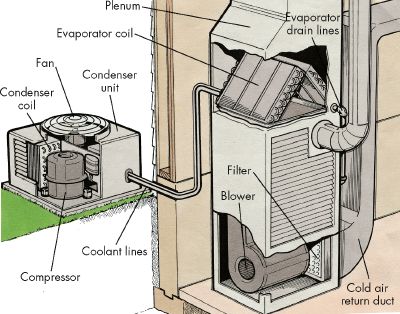
An AC compressor is one of the most expensive parts in your air conditioning system. When it fails, the fan may still run, but the system can no longer move heat the way it should. That is why compressor replacement is often one of the biggest repair bills a homeowner sees.
If you understand the price range before calling a contractor, it becomes much easier to tell whether the quote makes sense—or whether replacing the entire system may be the smarter move.
Quick Answer
The average AC compressor replacement cost in 2026 is usually between $1,200 and $3,500 total.
That price often includes:
- the new compressor
- labor
- refrigerant recovery and recharge
- basic system testing
On larger 4- to 5-ton systems, total cost can climb beyond $4,000.
Average AC compressor replacement cost by tonnage
| AC Size | Average Total Cost |
|---|---|
| 2 Ton | $1,200 – $2,000 |
| 3 Ton | $1,500 – $2,800 |
| 4 Ton | $2,000 – $3,500 |
| 5 Ton | $2,800 – $4,500 |
If you are not sure what size system you have, read What Is a Ton in HVAC and compare with the AC Size Chart (BTU & Tonnage by Square Footage).
Why compressor replacement costs so much
The compressor is a sealed part inside the outdoor unit, and replacing it is not a quick swap like changing a thermostat or capacitor. The technician has to open the refrigeration circuit and perform several labor-intensive steps correctly.
That usually includes:
- recovering refrigerant
- removing the failed compressor
- brazing in the new unit
- pressure testing the system
- vacuuming the lines
- recharging refrigerant
- verifying electrical operation
That is why labor alone can easily run from $700 to $1,500, depending on region and system size.
Typical cost breakdown
A common mid-range repair might look something like this:
- compressor unit: $900 – $1,500
- labor: $800 – $1,200
- refrigerant: $200 – $600
- miscellaneous materials: $100 – $200
In hot states with heavy summer demand, quotes often come in toward the higher side of the range.
What usually causes compressor failure?
Compressors rarely fail for no reason. In many cases, the compressor is damaged because the system has been operating under stress for a long time.
Common causes include:
- electrical surges
- low refrigerant
- dirty condenser coils
- restricted airflow
- short cycling
- improper system sizing
If the unit is running but not actually cooling, compressor trouble can be one possible cause. See AC Running But Not Cooling.
Repeated short cycling can also damage a compressor over time, especially in oversized systems. Read AC Short Cycling Explained.
Repair vs replace the entire AC system
This is the biggest decision in many compressor failures. Replacing only the compressor is not always the smartest move—especially if the rest of the system is already near the end of its life.
Full replacement becomes more attractive if the system is:
- more than 10 to 12 years old
- using older refrigerant types
- already having repeated repair issues
- inefficient compared with newer equipment
In some cases, replacing the entire system costs only $2,000 to $4,000 more than a major compressor repair.
For full-system pricing context, compare Central AC Replacement Cost in 2026, How Much Does a 3 Ton AC Unit Cost in 2026?, and How Much Does a 5 Ton AC Unit Cost in 2026?.
Warranty coverage can change the math
Before approving compressor replacement, always check the manufacturer warranty. Many systems come with a 5- to 10-year compressor warranty, but that does not always mean the whole repair is free.
In many cases:
- the compressor part is covered
- labor is not covered
- refrigerant and other materials may not be covered
A warranty claim can reduce the bill significantly, but it rarely brings the total cost to zero.
Signs your compressor may be failing
Compressor problems can look like several different AC issues. Common warning signs include:
- AC runs but no cold air comes out
- the outdoor unit hums but does not cool properly
- breaker trips repeatedly
- loud clanking or hard-start noises
- energy bills rise even though comfort drops
Some of these signs can overlap with low refrigerant, capacitor failure, or airflow problems, which is why diagnosis matters before approving a big repair.
Why sizing affects compressor life
Compressor lifespan is closely tied to how hard the system has to work. A properly sized AC usually runs in balanced cycles. A poorly sized one often operates under more stress.
If the system is too large, it may short cycle and create repeated hard starts. If it is too small, it may run for very long stretches and overheat under load. Both patterns can shorten compressor life.
For the sizing side of the issue, read Air Conditioner Sizing Guide, Oversized AC Symptoms, and Undersized AC Symptoms.
Climate also changes compressor lifespan
In hotter climates, compressors usually wear faster because they run longer and operate under higher pressure for more of the year.
That is especially true in places like:
- Texas
- Florida
- Arizona
In milder climates, compressors often last longer because total runtime is lower and the system gets more rest between heavy cooling periods.
Can you replace just the compressor?
Technically, yes. In many cases the compressor can be replaced without replacing the entire outdoor unit. But that does not always mean it is the best choice.
Sometimes a failed compressor leaves behind metal debris or contamination inside the system. In other cases, the condenser, coil, or refrigerant circuit may already be compromised.
That is why some technicians recommend replacing the entire condenser—or even the full system—instead of only installing a new compressor into an aging setup.
How to reduce the risk of compressor failure
The best way to avoid compressor replacement is to reduce system stress over time.
- change air filters regularly
- clean the condenser yearly
- schedule annual AC maintenance
- install surge protection if needed
- avoid oversizing the system
Efficiency and system behavior also matter. See SEER Rating Explained if you are comparing replacement options.
Final Cost Summary
In 2026, AC compressor replacement cost usually falls between $1,200 and $3,500, with larger systems sometimes going beyond $4,000.
If the system is relatively new and under warranty, compressor replacement can make sense. If the system is older or already showing multiple failures, full replacement may be the better long-term decision.
A compressor is expensive—but replacing the entire AC without comparing both options can cost even more.
FAQ
Is it worth replacing an AC compressor?
Often yes, if the system is under 10 years old or still under warranty. On older systems, full replacement may offer better value.
Why is compressor replacement so expensive?
Because the job requires refrigerant recovery, sealed-system work, labor, recharging, and full testing—not just swapping a simple part.
How long does an AC compressor last?
In many homes, about 10 to 15 years, depending on climate, maintenance, sizing, and operating stress.