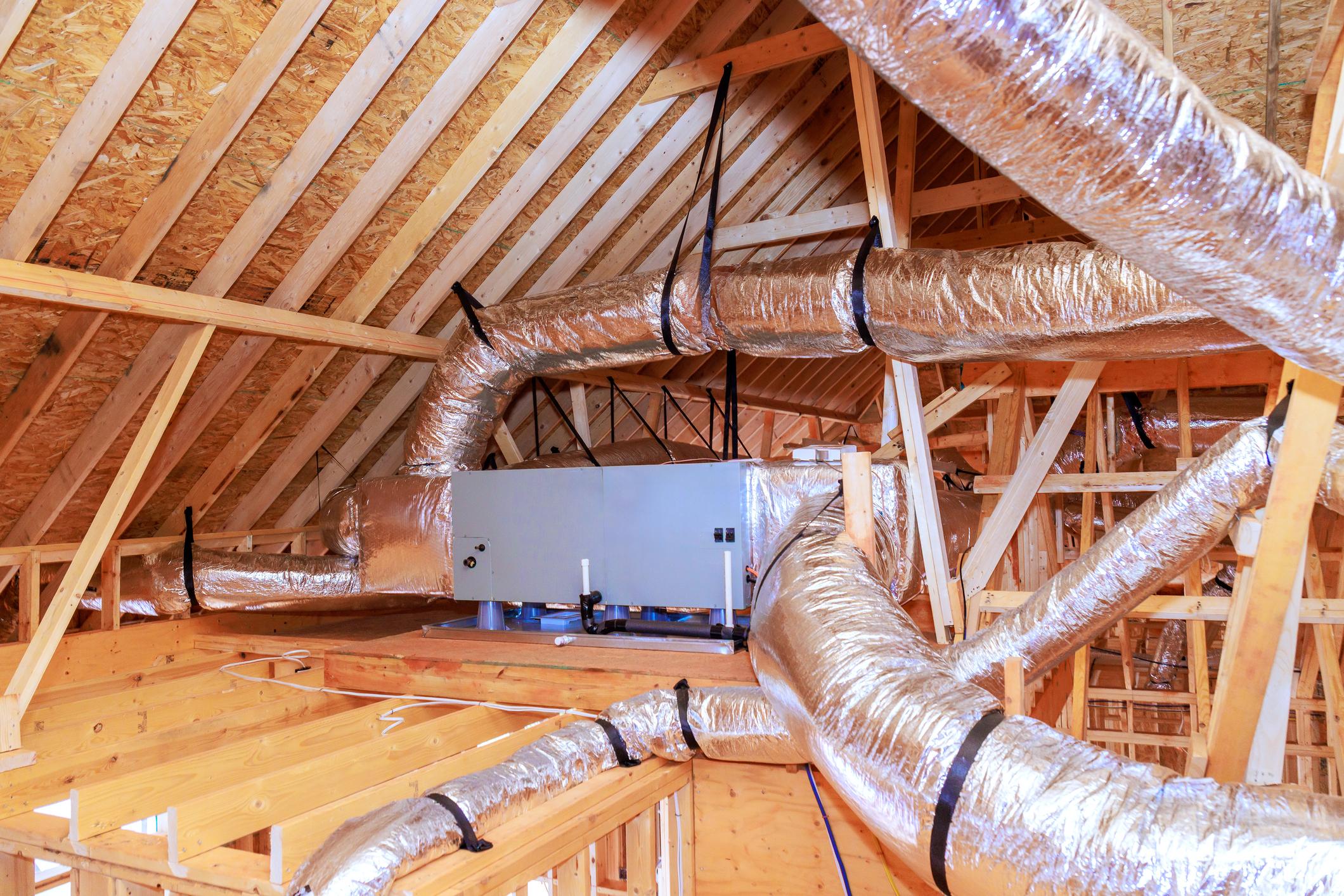
For a 1,600 sq ft house, the right AC size is usually somewhere between 28,000 and 36,000 BTU, or about 2.5 to 3 tons. In many homes, the real decision is not whether bigger sounds safer. It is whether the house actually benefits more from extra cooling capacity or from longer, steadier runtime.
That is why plenty of 1,600 sq ft homes feel better with a properly matched 2.5-ton system than with a rushed jump to 3 tons.
Quick Answer
A 1,600 sq ft house typically needs 28,000–36,000 BTU, which puts it in the 2.5 to 3 ton range.
- 2.5 tons (30,000 BTU) is often enough in moderate climates
- 3 tons (36,000 BTU) makes more sense in hotter climates or homes with higher heat gain
The right size depends on insulation, humidity, ceiling height, sun exposure, and airflow—not just square footage.
Why 1,600 sq ft is a borderline size
A 1,600 sq ft house sits in one of the most easily mis-sized ranges. It is close enough to smaller homes that 2.5 tons often works, but large enough that some contractors or homeowners start leaning toward 3 tons automatically.
That is where mistakes happen. A system that is too small may run too long, but a system that is too large can create a different problem: short cycles, weaker dehumidification, and less stable comfort.
If you want the sizing basics first, read What Is BTU in Air Conditioning? and What Is a Ton in HVAC?.
When 2.5 tons is usually the better fit
A 2.5-ton AC delivers about 30,000 BTU of cooling and usually needs around 1,000 CFM of airflow. For many average homes, that is enough to cool well without creating oversizing issues.
It is often the better choice when:
- the climate is moderate
- insulation is in decent shape
- ceilings are close to 8 feet
- window exposure is normal
- the layout is fairly standard
In these conditions, 2.5 tons often gives longer cooling cycles, better humidity removal, and smoother comfort.
When 3 tons makes more sense
A 3-ton AC provides about 36,000 BTU and needs around 1,200 CFM of airflow. That added capacity can be appropriate when the house gains heat faster than average.
3 tons is more reasonable when:
- you live in a hot climate
- the attic gets very hot in summer
- the house has large west-facing windows
- ceilings are higher than standard
- the layout is more open than average
If you are in a hotter region, compare What Size AC Do I Need in Texas? and What Size AC Do I Need in Florida?.
Why faster cooling is not always better
This is the part many homeowners miss. A larger AC may cool the thermostat area more quickly, but that does not always mean the whole house will feel better. When the system shuts off too soon, it may not run long enough to remove enough moisture from the air.
That can lead to:
- humidity staying too high
- temperature swings between cycles
- more compressor wear
- higher electricity costs than expected
For a 1,600 sq ft house, runtime balance usually matters more than simply choosing the bigger number.
If you want to understand those warning signs better, read Oversized AC Symptoms and AC Short Cycling Explained.
Airflow matters as much as tonnage
Even if the tonnage looks correct, the system still needs enough duct capacity to move the required air. A common HVAC rule is:
400 CFM per ton
- 2.5 tons → about 1,000 CFM
- 3 tons → about 1,200 CFM
If the duct system was designed around 1,000 to 1,100 CFM, jumping to 3 tons without checking airflow can create:
- higher static pressure
- weaker efficiency
- louder vents
- comfort problems that feel like undersizing
For more on this, read How Many CFM Per Ton? and Undersized AC Symptoms.
Climate-based recommendation for 1,600 sq ft
A simple way to think about this size is:
- Moderate climates: 2.5 tons is often ideal
- Mixed climates: 2.5 to 3 tons depending on insulation and sun load
- Hot and humid climates: 3 tons is often the safer choice
That is why two homes with the same square footage can still need different AC sizes.
A smarter option than upsizing: two-stage equipment
Sometimes the best answer is not to jump from 2.5 tons to 3 tons. A smarter move can be using better equipment behavior instead of just more capacity.
A two-stage 2.5-ton system can often outperform a single-stage 3-ton unit because it can:
- run longer at lower output
- remove more moisture
- reduce temperature swings
- improve overall comfort consistency
That makes staged equipment especially useful for borderline homes like this one.
Ceiling height and layout can push the answer upward
Basic AC sizing assumes:
- 8-foot ceilings
- average insulation
- a balanced room layout
You may lean closer to 3 tons if your home has:
- vaulted ceilings
- large open living areas
- strong afternoon sun exposure
- significant glass area
That is because cooling load follows air volume and heat gain, not just floor area.
How 1,600 sq ft compares with nearby home sizes
One of the easiest ways to sense-check your estimate is to compare nearby square footage guides.
- What Size AC for 1500 Sq Ft House?
- What Size AC for 1800 Sq Ft House?
- AC Size Chart (BTU & Tonnage by Square Footage)
You can also use the AC Size Calculator if you want a quick range before going deeper.
Should you get a Manual J calculation?
Yes. A Manual J load calculation is still the best way to avoid unnecessary upsizing, especially when the home sits right between two possible sizes.
Manual J looks at:
- insulation values
- window heat gain
- orientation
- air leakage
- duct losses
For the full sizing framework, read Air Conditioner Sizing Guide.
Final Recommendation
For most 1,600 sq ft homes:
- 2.5 tons is often right in moderate climates
- 3 tons is more common in hotter climates or higher heat-gain homes
- duct airflow should always be checked before upsizing
- two-stage equipment is often smarter than jumping straight to a larger single-stage unit
At 1,600 sq ft, the best AC is not the biggest one. It is the one that runs long enough to cool evenly, control humidity, and match the home’s actual airflow and heat load.
FAQ
Is 3 tons too big for 1,600 sq ft?
In moderate climates, it can be. In hotter climates or homes with high heat gain, 3 tons may be appropriate.
How many BTU do I need for 1,600 sq ft?
Usually around 28,000 to 36,000 BTU, depending on climate, insulation, and ceiling height.
Is 2.5 tons enough for 1,600 sq ft?
Yes, often it is—especially in well-insulated homes in moderate regions.
Does ceiling height affect AC size?
Yes. Higher ceilings increase total air volume, which increases the cooling load.