Author: admin

  • AC Running But Not Cooling (10 Causes & Fixes โ€“ 2026 Guide)

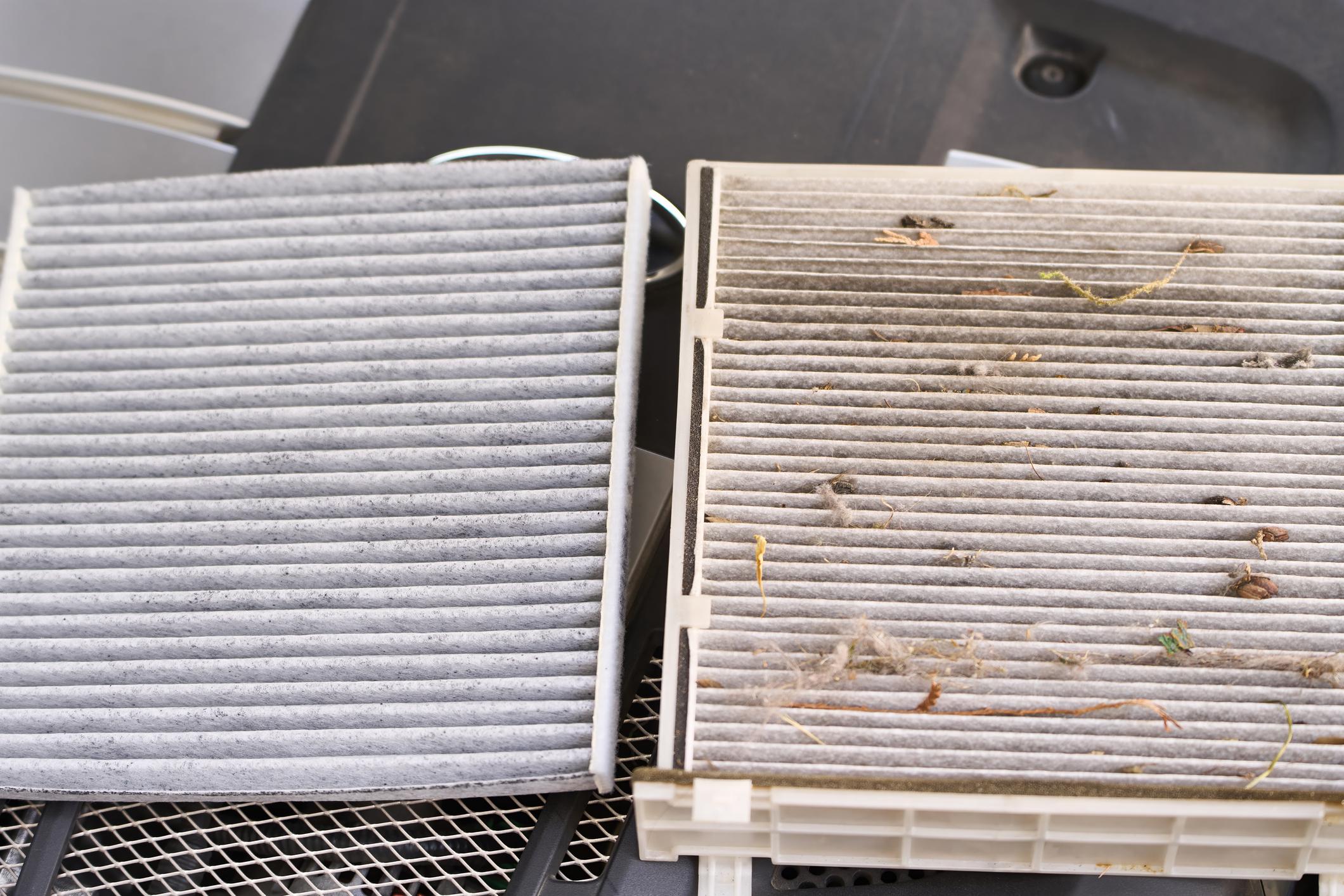
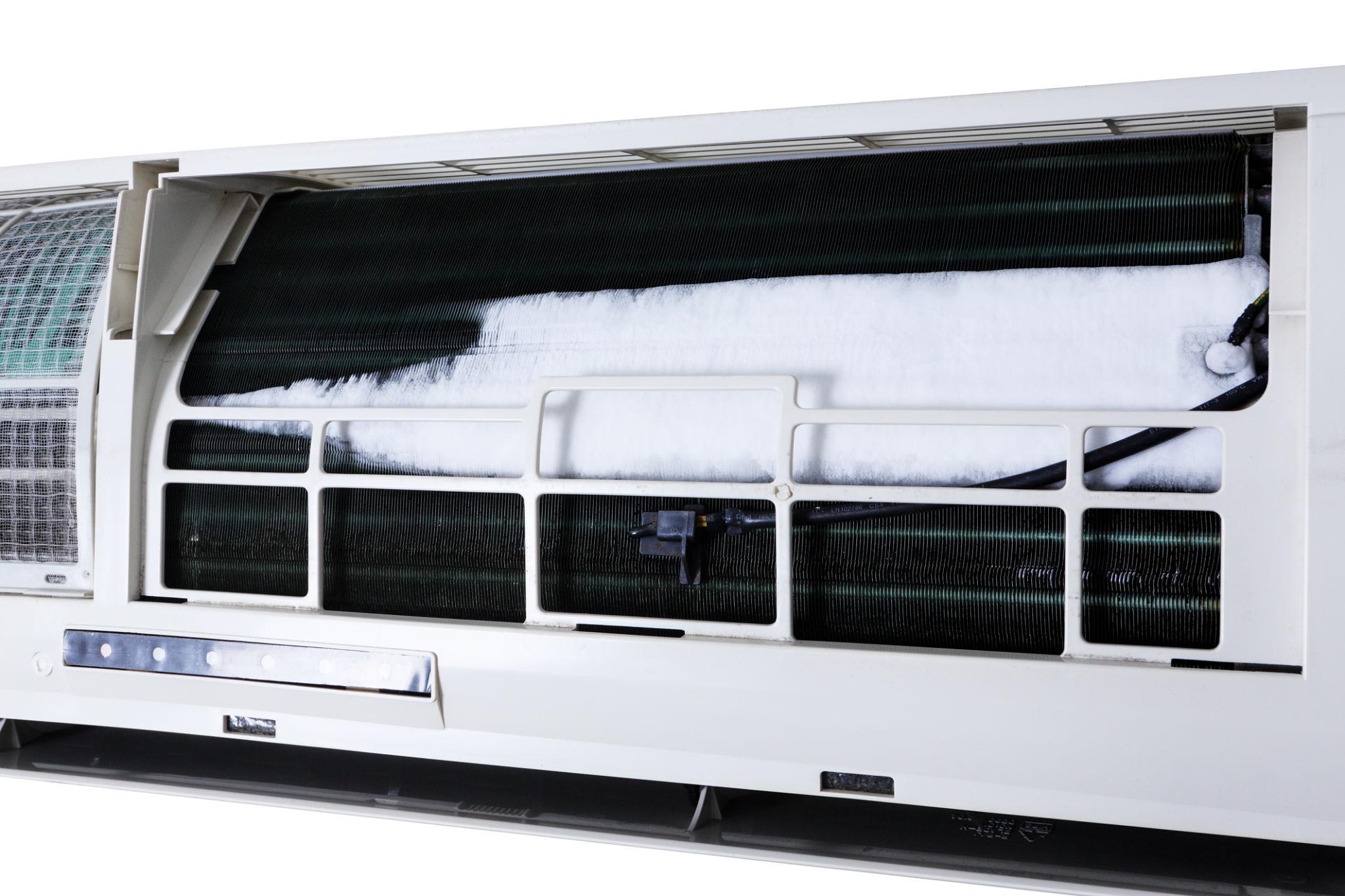
    Air conditioner running but not cooling showing frozen coil and dirty air filter example
    Air conditioner running but not cooling showing frozen coil and dirty air filter example

    If your AC is running but not cooling, donโ€™t panic.

    In most cases, the issue is not a complete system failure โ€” itโ€™s airflow restriction, low refrigerant, or thermostat misconfiguration.

    Letโ€™s diagnose it step by step.


    Quick Answer

    If your AC is running but not cooling, the most common causes are:

    • Dirty air filter
    • Low refrigerant
    • Frozen evaporator coil
    • Thermostat settings
    • Dirty condenser coils
    • Duct airflow restrictions

    Start by checking the air filter and thermostat before calling a technician.


    1๏ธโƒฃ Dirty Air Filter (Most Common Cause)

    A clogged air filter blocks airflow.

    When airflow drops:

    • Cooling efficiency decreases
    • Evaporator coil can freeze
    • Air feels warm or weak

    Fix:
    Replace the filter and wait 30โ€“60 minutes.

    Restricted airflow can mimic undersizing:
    ๐Ÿ‘‰ Undersized AC Symptoms


    2๏ธโƒฃ Thermostat Settings Issue

    Check:

    • Is it set to โ€œCoolโ€?
    • Is the fan set to โ€œAutoโ€ (not โ€œOnโ€)?
    • Is temperature set lower than room temp?

    If the fan is set to โ€œOn,โ€ it may circulate warm air between cycles.


    3๏ธโƒฃ Frozen Evaporator Coil

    If airflow is restricted or refrigerant is low, the indoor coil may freeze.

    Signs:

    • Ice on copper lines
    • Weak airflow
    • Water leakage after system shuts off

    Turn system off and allow it to thaw.

    If freezing continues, refrigerant levels must be checked.


    4๏ธโƒฃ Low Refrigerant

    Low refrigerant prevents proper heat absorption.

    Symptoms:

    • AC runs constantly
    • Air feels slightly cool but not cold
    • Higher electric bills

    This requires professional repair.


    5๏ธโƒฃ Dirty Outdoor Condenser Unit

    If the outside unit is covered in dirt or debris:

    • Heat cannot dissipate
    • Cooling capacity drops
    • System works harder

    Fix:
    Gently clean condenser fins with water (power off first).


    6๏ธโƒฃ Leaky or Blocked Ductwork

    Air may be cooling properly but never reaching rooms.

    Common signs:

    • Some rooms warm, others cool
    • Weak airflow
    • Whistling noises

    Airflow problems are common when systems are oversized:
    ๐Ÿ‘‰ Oversized AC Symptoms


    7๏ธโƒฃ Incorrect AC Size

    If your AC is too small:

    • It runs constantly
    • Never reaches set temperature

    If too large:

    • It cools quickly but shuts off
    • Humidity remains high

    Correct sizing matters:
    ๐Ÿ‘‰ Air Conditioner Sizing Guide


    8๏ธโƒฃ Compressor Issues

    If compressor fails:

    • Outdoor unit may run but not cool properly
    • You may hear humming or clicking


    9๏ธโƒฃ Electrical or Capacitor Failure

    A weak capacitor may allow the fan to run but not fully power the compressor.

    Signs:

    • Buzzing noise
    • Outdoor fan spinning slowly

    Professional diagnosis required.


    ๐Ÿ”Ÿ Extremely Hot Weather

    During extreme heat waves:

    • AC may run continuously
    • Cooling capacity drops

    This doesnโ€™t always mean failure โ€” the system may be at maximum capacity.

    If unsure what size your home needs:
    ๐Ÿ‘‰ AC Size Chart (BTU & Tonnage by Square Footage)


    When to Call a Professional

    Call an HVAC technician if:

    • Ice keeps forming
    • Breaker keeps tripping
    • System runs non-stop
    • Refrigerant leak suspected

    Delaying repair can damage the compressor.


    How to Prevent This Problem

    โœ” Change air filter every 1โ€“3 months
    โœ” Clean condenser yearly
    โœ” Schedule annual maintenance
    โœ” Verify proper AC sizing
    โœ” Seal duct leaks


    Final Summary

    If your AC is running but not cooling:

    Start with airflow.

    Most cases are caused by dirty filters, blocked airflow, or low refrigerant โ€” not total system failure.

    Quick diagnosis can prevent expensive repairs.


    FAQ (Schema Ready)

    Why is my AC running but the house isnโ€™t cooling?

    Most commonly due to dirty filters, low refrigerant, or airflow blockage.

    Can low refrigerant cause warm air?

    Yes. It prevents proper heat absorption and reduces cooling capacity.

    Should I turn my AC off if itโ€™s not cooling?

    If ice forms or airflow drops significantly, turn it off and inspect the
  • What Size AC for 1600 Sq Ft House? (2.5 Ton vs 3 Ton Guide โ€“ 2026)

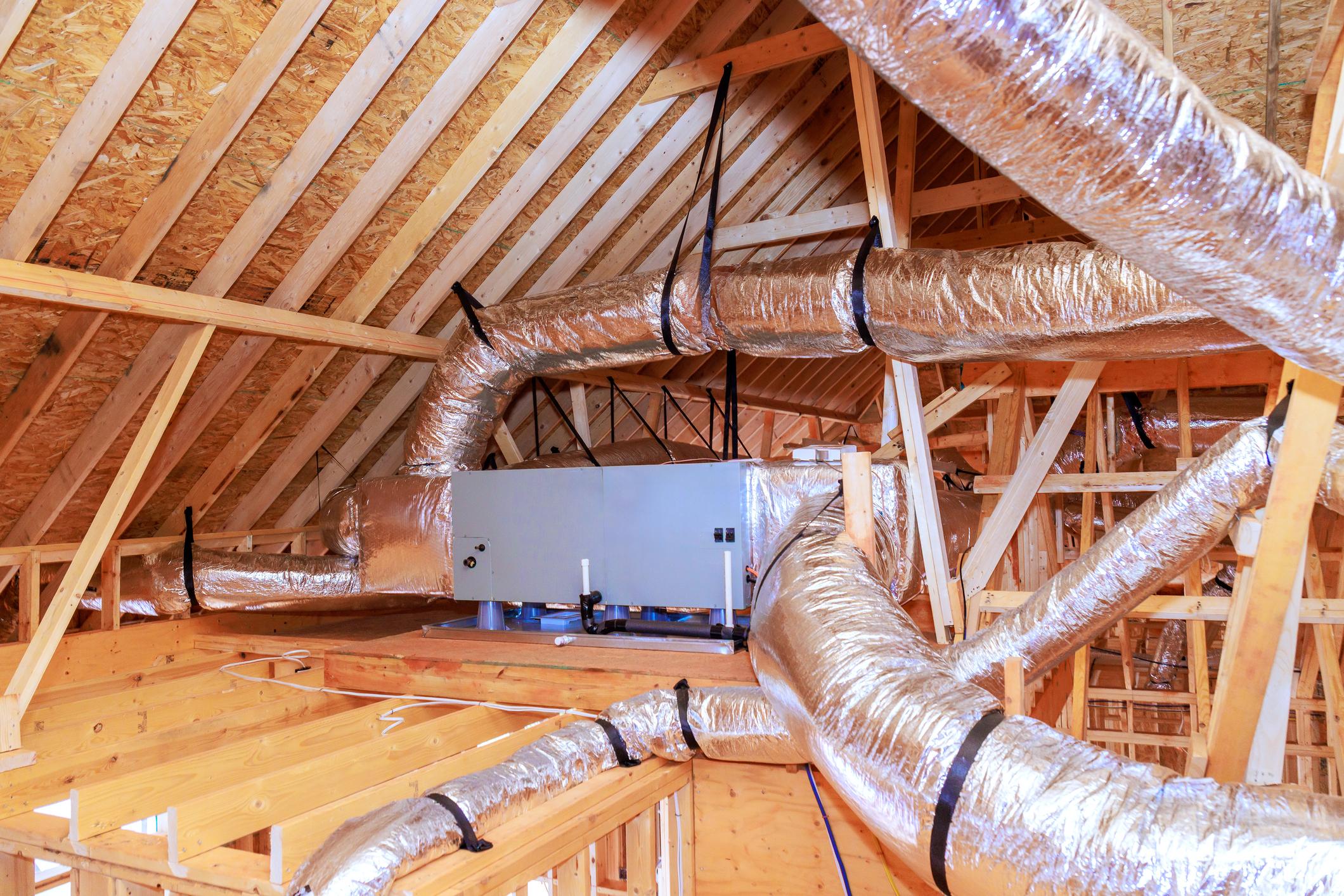
    2.5 ton vs 3 ton AC system comparison for a 1600 sq ft house showing airflow and BTU capacity

    For a 1,600 sq ft house, the right AC size is usually somewhere between 28,000 and 36,000 BTU, or about 2.5 to 3 tons. In many homes, the real decision is not whether bigger sounds safer. It is whether the house actually benefits more from extra cooling capacity or from longer, steadier runtime.

    That is why plenty of 1,600 sq ft homes feel better with a properly matched 2.5-ton system than with a rushed jump to 3 tons.

    Quick Answer

    A 1,600 sq ft house typically needs 28,000โ€“36,000 BTU, which puts it in the 2.5 to 3 ton range.

    • 2.5 tons (30,000 BTU) is often enough in moderate climates
    • 3 tons (36,000 BTU) makes more sense in hotter climates or homes with higher heat gain

    The right size depends on insulation, humidity, ceiling height, sun exposure, and airflowโ€”not just square footage.

    Why 1,600 sq ft is a borderline size

    A 1,600 sq ft house sits in one of the most easily mis-sized ranges. It is close enough to smaller homes that 2.5 tons often works, but large enough that some contractors or homeowners start leaning toward 3 tons automatically.

    That is where mistakes happen. A system that is too small may run too long, but a system that is too large can create a different problem: short cycles, weaker dehumidification, and less stable comfort.

    If you want the sizing basics first, read What Is BTU in Air Conditioning? and What Is a Ton in HVAC?.

    When 2.5 tons is usually the better fit

    A 2.5-ton AC delivers about 30,000 BTU of cooling and usually needs around 1,000 CFM of airflow. For many average homes, that is enough to cool well without creating oversizing issues.

    It is often the better choice when:

    • the climate is moderate
    • insulation is in decent shape
    • ceilings are close to 8 feet
    • window exposure is normal
    • the layout is fairly standard

    In these conditions, 2.5 tons often gives longer cooling cycles, better humidity removal, and smoother comfort.

    When 3 tons makes more sense

    A 3-ton AC provides about 36,000 BTU and needs around 1,200 CFM of airflow. That added capacity can be appropriate when the house gains heat faster than average.

    3 tons is more reasonable when:

    • you live in a hot climate
    • the attic gets very hot in summer
    • the house has large west-facing windows
    • ceilings are higher than standard
    • the layout is more open than average

    If you are in a hotter region, compare What Size AC Do I Need in Texas? and What Size AC Do I Need in Florida?.

    Why faster cooling is not always better

    This is the part many homeowners miss. A larger AC may cool the thermostat area more quickly, but that does not always mean the whole house will feel better. When the system shuts off too soon, it may not run long enough to remove enough moisture from the air.

    That can lead to:

    • humidity staying too high
    • temperature swings between cycles
    • more compressor wear
    • higher electricity costs than expected

    For a 1,600 sq ft house, runtime balance usually matters more than simply choosing the bigger number.

    If you want to understand those warning signs better, read Oversized AC Symptoms and AC Short Cycling Explained.

    Airflow matters as much as tonnage

    Even if the tonnage looks correct, the system still needs enough duct capacity to move the required air. A common HVAC rule is:

    400 CFM per ton

    • 2.5 tons โ†’ about 1,000 CFM
    • 3 tons โ†’ about 1,200 CFM

    If the duct system was designed around 1,000 to 1,100 CFM, jumping to 3 tons without checking airflow can create:

    • higher static pressure
    • weaker efficiency
    • louder vents
    • comfort problems that feel like undersizing

    For more on this, read How Many CFM Per Ton? and Undersized AC Symptoms.

    Climate-based recommendation for 1,600 sq ft

    A simple way to think about this size is:

    • Moderate climates: 2.5 tons is often ideal
    • Mixed climates: 2.5 to 3 tons depending on insulation and sun load
    • Hot and humid climates: 3 tons is often the safer choice

    That is why two homes with the same square footage can still need different AC sizes.

    A smarter option than upsizing: two-stage equipment

    Sometimes the best answer is not to jump from 2.5 tons to 3 tons. A smarter move can be using better equipment behavior instead of just more capacity.

    A two-stage 2.5-ton system can often outperform a single-stage 3-ton unit because it can:

    • run longer at lower output
    • remove more moisture
    • reduce temperature swings
    • improve overall comfort consistency

    That makes staged equipment especially useful for borderline homes like this one.

    Ceiling height and layout can push the answer upward

    Basic AC sizing assumes:

    • 8-foot ceilings
    • average insulation
    • a balanced room layout

    You may lean closer to 3 tons if your home has:

    • vaulted ceilings
    • large open living areas
    • strong afternoon sun exposure
    • significant glass area

    That is because cooling load follows air volume and heat gain, not just floor area.

    How 1,600 sq ft compares with nearby home sizes

    One of the easiest ways to sense-check your estimate is to compare nearby square footage guides.

    You can also use the AC Size Calculator if you want a quick range before going deeper.

    Should you get a Manual J calculation?

    Yes. A Manual J load calculation is still the best way to avoid unnecessary upsizing, especially when the home sits right between two possible sizes.

    Manual J looks at:

    • insulation values
    • window heat gain
    • orientation
    • air leakage
    • duct losses

    For the full sizing framework, read Air Conditioner Sizing Guide.

    Final Recommendation

    For most 1,600 sq ft homes:

    • 2.5 tons is often right in moderate climates
    • 3 tons is more common in hotter climates or higher heat-gain homes
    • duct airflow should always be checked before upsizing
    • two-stage equipment is often smarter than jumping straight to a larger single-stage unit

    At 1,600 sq ft, the best AC is not the biggest one. It is the one that runs long enough to cool evenly, control humidity, and match the homeโ€™s actual airflow and heat load.

    FAQ

    Is 3 tons too big for 1,600 sq ft?

    In moderate climates, it can be. In hotter climates or homes with high heat gain, 3 tons may be appropriate.

    How many BTU do I need for 1,600 sq ft?

    Usually around 28,000 to 36,000 BTU, depending on climate, insulation, and ceiling height.

    Is 2.5 tons enough for 1,600 sq ft?

    Yes, often it isโ€”especially in well-insulated homes in moderate regions.

    Does ceiling height affect AC size?

    Yes. Higher ceilings increase total air volume, which increases the cooling load.

  • What Size AC for 1800 Sq Ft House? (Humidity & Comfort Guide โ€“ 2026)

    A 1,800 sq ft house usually needs about 32,000 to 40,000 BTU, or roughly 2.5 to 3.5 tons of cooling capacity. But this is one of those home sizes where comfort problems often come from humidity control and cycle balance, not just from lacking raw cooling power.

    That is why many 1,800 sq ft homes feel uncomfortable even when the thermostat says the temperature is fine. The system may be cooling quickly, but not running long enough to remove enough moisture.

    Quick Answer

    For most 1,800 sq ft homes, the typical AC size range is:

    • 32,000โ€“40,000 BTU
    • 2.5 to 3.5 tons

    In moderate climates, 2.5 to 3 tons is often enough. In hot and humid climates, many homes fall closer to 3 to 3.5 tons. The right answer depends on how well the system can balance cooling runtime with moisture removal.

    Why 1,800 sq ft is a common comfort trap

    This size sits right between smaller homes that clearly fit in the 2.5-ton range and larger homes that begin pushing toward 3.5 tons. That makes 1,800 sq ft one of the easiest house sizes to mis-size.

    A common mistake goes like this:

    • the homeowner jumps to 3.5 tons just to be safe
    • the house cools quickly
    • the cycle ends too soon
    • humidity stays behind
    • the home feels clammy

    That is not always a temperature problem. Very often, it is a runtime and dehumidification problem.

    If you need a refresher on cooling basics, read What Is BTU in Air Conditioning? and What Is a Ton in HVAC?.

    The real question is not just size โ€” it is runtime

    When homeowners ask what size AC they need for 1,800 sq ft, the better question is often:

    How long should the system run to cool properly and remove humidity?

    At this size, a slightly oversized unit can create comfort issues faster than many people expect.

    When 2.5 tons makes sense

    A 2.5-ton AC provides about 30,000 BTU of cooling. That can work well when the house is fairly efficient and the climate is not extreme.

    It usually makes sense when:

    • the climate is moderate
    • insulation is strong
    • ceilings are standard height
    • windows are efficient
    • solar gain is limited

    In these homes, 2.5 tons often gives longer cooling cycles, more stable humidity removal, and lower peak energy demand.

    Why 3 tons is often the sweet spot

    For many 1,800 sq ft homes, 3 tons is the most balanced choice. It often lands in the best middle ground between enough cooling capacity and enough runtime.

    A 3-ton system is commonly a strong fit when:

    • the home is in a mixed or moderate climate
    • insulation is average
    • the house has some sun exposure but not extreme heat gain
    • the layout is fairly typical

    That is why 3 tons is often the safest answer for average 1,800 sq ft homes that are not unusually hot or unusually efficient.

    When 3.5 tons may be justified

    A 3.5-ton AC provides about 42,000 BTU per hour. That size can make sense, but only when the house actually needs it.

    It becomes easier to justify when:

    • you live in a hot southern climate
    • the attic gets very hot in summer
    • the home has large west-facing windows
    • ceilings are 9โ€“10 feet high
    • solar heat gain is above average

    If those factors are not present, jumping to 3.5 tons can increase the risk of oversizing. For the warning signs, read Oversized AC Symptoms.

    Why humidity matters more than people expect at 1,800 sq ft

    This is where 1,800 sq ft homes often get tricky. Many homes this size have larger living areas, more open layouts, and rooms that do not cool evenly. If the AC shuts off too quickly, the air may cool down without actually drying out.

    That can lead to:

    • sticky indoor air
    • musty smells
    • condensation near vents
    • higher mold or mildew risk over time

    If your house feels cool but still uncomfortable, also read Why Is My House Humid Even With the AC On?.

    Airflow can change the answer completely

    Even if the tonnage looks correct on paper, the system still needs enough airflow to perform the way it should. A standard HVAC rule is:

    400 CFM per ton

    • 2.5 tons โ†’ about 1,000 CFM
    • 3 tons โ†’ about 1,200 CFM
    • 3.5 tons โ†’ about 1,400 CFM

    If the duct system was designed around 1,200 CFM, installing a 3.5-ton unit without checking airflow may reduce efficiency and create pressure problems.

    For more on that, read How Many CFM Per Ton?.

    Climate adjustment for 1,800 sq ft homes

    A simple way to think about 1,800 sq ft sizing is this:

    • Moderate climates: 2.5 to 3 tons is often enough
    • Hot and humid climates: 3 to 3.5 tons is more common
    • Desert climates: 3 to 3.5 tons may also be justified because of solar heat gain

    Regional guides can help you estimate more accurately. See What Size AC Do I Need in Texas?, What Size AC Do I Need in Florida?, and What Size AC Do I Need in California?.

    Why two-stage equipment can solve the borderline problem

    For many 1,800 sq ft homes, the best solution is not automatically to increase tonnage. A two-stage 3-ton system can often perform better than a single-stage 3.5-ton unit.

    That is because two-stage equipment can:

    • run longer at lower output
    • remove more humidity
    • reduce temperature swings
    • deliver more consistent comfort

    That makes staging a smart option for homes that sit right between two sizes.

    Ceiling height and layout still matter

    Standard sizing rules usually assume:

    • 8-foot ceilings
    • a fairly typical room layout
    • average insulation

    If your home has vaulted ceilings, large open spaces, or a lot of glass, the actual cooling load can rise noticeably. In those cases, square footage alone may underestimate what the house needs.

    How 1,800 sq ft compares with nearby sizes

    One of the easiest ways to sense-check your estimate is to compare nearby home sizes.

    That usually makes it easier to see whether your home really belongs closer to 2.5 tons or 3.5 tons.

    Bottom line

    For most 1,800 sq ft homes, the right AC size usually falls between 2.5 and 3.5 tons. In moderate climates, 2.5 to 3 tons is often enough. In hotter or more humid climates, 3 to 3.5 tons may be justified.

    At this house size, the goal is not maximum cooling speed. It is the right balance of runtime, humidity removal, airflow, and comfort. The best AC is not the biggest one. It is the one that runs long enough to keep the house dry, stable, and comfortable.

  • SEER Rating Explained (SEER2 Update โ€“ 2026 Guide)

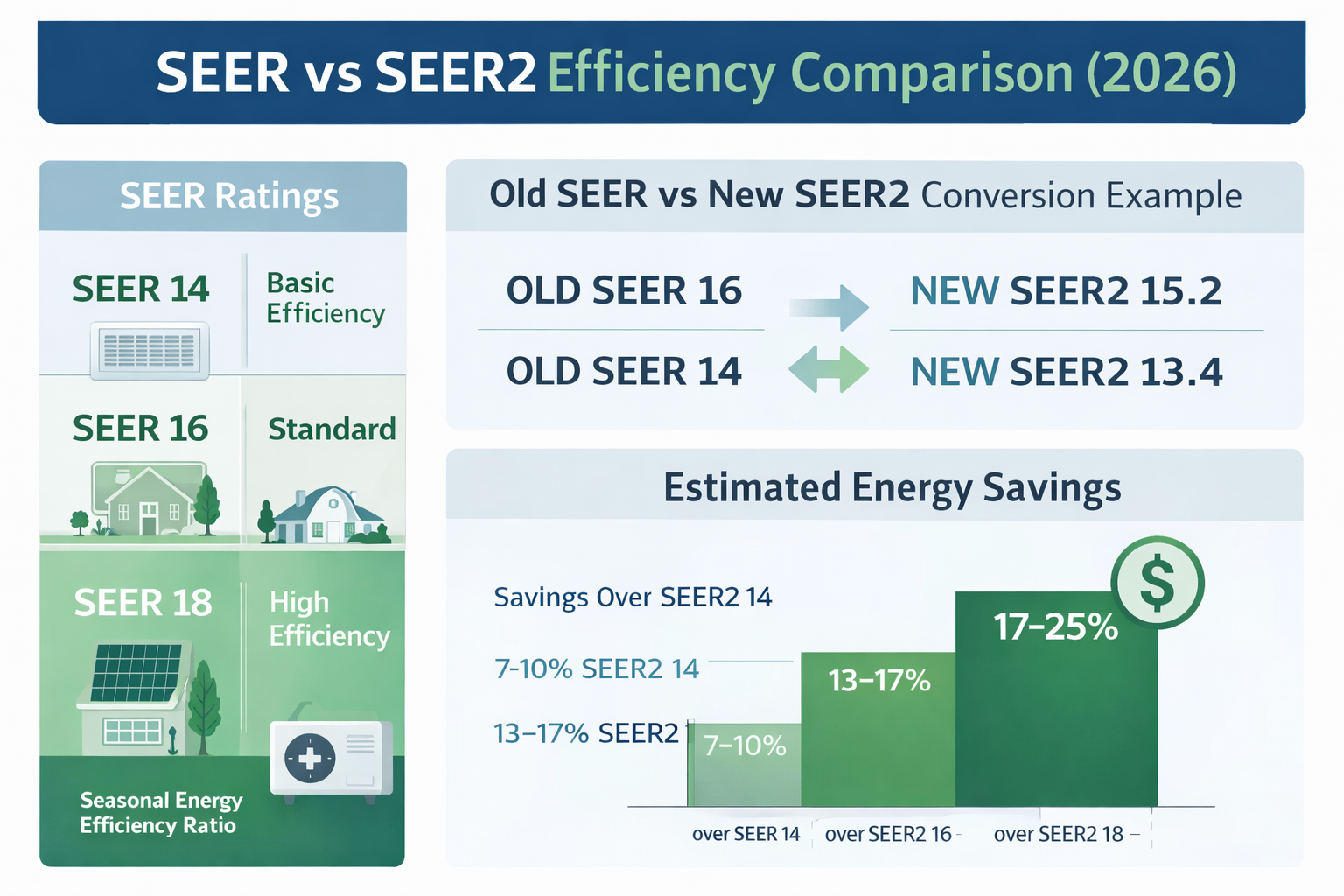
    SEER vs SEER2 efficiency comparison chart showing energy savings and rating differences

    SEER Rating Explained (SEER2 Update โ€“ 2026 Guide)

    If you are shopping for a new air conditioner, you have probably seen labels like SEER 14, SEER 16, or SEER2 17. Those numbers matter, but they do not mean what many homeowners think they mean.

    SEER measures efficiency, not raw cooling power. A higher SEER or SEER2 rating usually means the system uses less electricity to deliver the same amount of cooling over a season.

    Quick Answer

    SEER stands for Seasonal Energy Efficiency Ratio. It measures how efficiently an air conditioner cools your home over a full cooling season. A higher SEER rating means greater efficiency and lower electricity consumption. As of 2026, SEER2 is the updated testing standard used for modern HVAC equipment.

    What SEER actually measures

    At its core, SEER compares:

    Total cooling output (BTU)
    divided by
    Total electrical energy used (watt-hours)

    In simple terms, it answers this question:

    How much cooling does the AC provide for the electricity it consumes?

    That is why a higher SEER rating generally means lower operating cost. If you need a quick refresher on cooling output first, read What Is BTU in Air Conditioning?.

    SEER vs SEER2: what changed?

    The biggest recent update is that HVAC systems are now measured using SEER2 instead of the older SEER standard for modern compliance and comparisons.

    SEER2 uses updated test procedures that better reflect real-world external static pressure and field conditions. That means a unit may look like it has a lower number on paper, even if its real efficiency is basically the same as an older model rated under the previous system.

    Common examples:

    • Old SEER 16 โ‰ˆ New SEER2 15.2
    • Old SEER 14 โ‰ˆ New SEER2 13.4

    So when comparing systems, make sure you are comparing SEER to SEER or SEER2 to SEER2โ€”not mixing the two.

    Why SEER2 matters in real life

    The reason this update matters is simple: homeowners often think a lower SEER2 number means newer equipment is less efficient. That is usually not true. In many cases, the number looks lower only because the testing method became stricter.

    That is why you should never compare an old marketing brochure listing โ€œSEER 16โ€ against a new system labeled โ€œSEER2 15.2โ€ and assume the new one is worse.

    Minimum SEER requirements in 2026

    Efficiency minimums vary by region because cooling demand is not the same everywhere. In hotter states, the minimum allowed efficiency is generally higher.

    As a practical rule:

    • Northern states: minimum SEER2 is often around 13.4โ€“14.3
    • Southern and hotter states: minimum SEER2 is often around 14.3โ€“15.2

    That is one reason efficiency planning matters more in places with long cooling seasons. Related sizing guides: What Size AC Do I Need in Texas?, What Size AC Do I Need in Florida?, and What Size AC Do I Need in California?.

    SEER rating comparison chart

    SEER / SEER2 RangeEfficiency LevelBest For
    13โ€“14BasicMild climates
    15โ€“16StandardMost homes
    17โ€“18High EfficiencyHot climates / long cooling seasons
    19โ€“22+PremiumHigh-use homes and expensive electricity markets

    Is higher SEER worth the extra money?

    Sometimes yes, sometimes no. The answer depends more on how often you run the AC than on the label alone.

    A higher-efficiency system usually makes more sense when:

    • you live in a hot climate
    • electricity rates are high
    • the AC runs for many months per year
    • you plan to stay in the home long enough to recover the upfront cost

    In very mild climates, the extra cost may take too long to pay back. In places with long cooling seasons, the savings can be much more meaningful.

    Example energy savings

    Imagine a 3-ton AC running about 1,500 hours per year. Comparing a lower-efficiency model with a higher-efficiency one can reduce annual electricity use noticeably.

    In many cases, moving from a lower baseline efficiency to a higher one can cut cooling energy use by roughly 15% to 25%, depending on the exact models, installation quality, and runtime.

    That makes a much bigger difference in places with expensive electricity or long summers. For installation budgeting, see AC Installation Cost Per Square Foot.

    SEER vs tonnage: they are not the same thing

    This is one of the most common homeowner misunderstandings.

    • SEER = efficiency
    • Tonnage = cooling capacity

    For example:

    • 3 ton AC = 36,000 BTU of cooling
    • SEER 16 = how efficiently that system uses electricity

    So a higher SEER unit is not necessarily a bigger AC. It is simply a more efficient one.

    For the basics behind tonnage, read What Is a Ton in HVAC?.

    When higher SEER will not solve your problem

    Many homeowners assume a high-SEER system automatically fixes poor comfort. It does not.

    A high-efficiency unit will not correct:

    • bad ductwork
    • poor airflow
    • incorrect AC sizing
    • leaky returns or supply ducts
    • major insulation problems

    If the unit is oversized or undersized, efficiency gains can disappear fast. That is why correct sizing matters first. See Air Conditioner Sizing Guide, Oversized AC Symptoms, and Undersized AC Symptoms.

    Single-stage vs two-stage vs variable-speed

    As efficiency increases, the system often includes more advanced compressor technology. That matters because comfort is not only about energy savings. It is also about how the system behaves while cooling.

    Higher-efficiency systems often include:

    • two-stage compressors
    • variable-speed compressors

    These can improve:

    • humidity control
    • comfort consistency
    • temperature stability
    • part-load efficiency

    In many homes, better staging provides more comfort than simply buying a bigger unit.

    How to choose the right SEER rating

    A simple planning rule looks like this:

    • Mild climate: SEER2 14โ€“15 is often enough
    • Moderate climate: SEER2 15โ€“16 is a common target
    • Hot climate: SEER2 16โ€“18+ usually makes more sense
    • Long cooling season / high utility rates: higher SEER often has stronger payback

    The best choice depends on total installed cost, expected runtime, and how long you plan to stay in the home.

    Bottom line

    SEER rating tells you how efficiently an air conditioner uses electricity over a cooling season. A higher rating usually means lower operating cost, but it does not mean the AC is more powerful.

    Before choosing a system, make sure you:

    • confirm the AC is sized correctly
    • check the duct system and airflow
    • compare SEER2 ratings using the same standard
    • weigh energy savings against the installed price

    In hot climates and high-electricity-cost regions, a higher-SEER system can make a meaningful difference. But the best result comes when efficiency, sizing, and duct performance all work together.

  • What Size AC Do I Need in California? (BTU & Tonnage Guide โ€“ 2026)

    Choosing the right AC size in California is more complicated than in many other states because California does not have one single climate. A home near the coast may need far less cooling capacity than a home of the same size in Sacramento, Fresno, or Palm Springs.

    If you are asking what size AC do I need in California, the answer depends heavily on whether your home is in a coastal, inland, or desert climate zone.

    Quick Answer

    In California, most homes need about 20 to 28 BTU per square foot, depending on location.

    • Coastal areas: about 20โ€“22 BTU per sq ft
    • Inland areas: about 22โ€“26 BTU per sq ft
    • Desert regions: about 26โ€“28+ BTU per sq ft

    A 2,000 sq ft California home often needs somewhere between 3 and 4.5 tons, depending on the climate zone and heat exposure.

    If you need the basics first, read What Is BTU in Air Conditioning? and What Is a Ton in HVAC?.

    Why California sizing is different from other states

    California has one of the widest climate ranges in the country. That means square footage alone is not enough to size an AC correctly.

    Proper sizing often has to account for:

    • coastal marine air
    • inland valley heat
    • desert temperatures
    • solar exposure
    • Title 24 energy requirements

    A house in San Diego and a house in Palm Springs may be the same size, but the cooling load can be dramatically different.

    Coastal California: smaller AC sizing is often enough

    In coastal cities such as San Diego, San Francisco, or Santa Monica, summers are usually milder and nights cool down more effectively than in the interior of the state.

    Typical conditions include:

    • milder summer temperatures
    • cooler overnight lows
    • lower humidity than Florida or Gulf climates
    • shorter cooling seasons

    That is why many coastal homes only need about 20โ€“22 BTU per square foot.

    Example:

    2,000 sq ft ร— 21 BTU = 42,000 BTU
    42,000 รท 12,000 = about 3.5 tons

    In coastal California, oversizing is very common. Many systems are installed larger than necessary, which can reduce efficiency and comfort.

    Inland California: hotter summers raise the load

    Inland areas such as Los Angeles, Sacramento, and Fresno often deal with much stronger summer heat. These homes usually need more cooling capacity than coastal homes because daytime temperatures stay higher for longer.

    Typical inland conditions include:

    • 95ยฐF to 105ยฐF summer peaks
    • longer cooling season
    • stronger afternoon sun
    • higher attic heat gain

    A good working range for inland California is often 22โ€“26 BTU per square foot.

    Example:

    2,000 sq ft ร— 24 BTU = 48,000 BTU
    48,000 รท 12,000 = about 4 tons

    Desert California: the highest BTU demand

    Desert regions such as Palm Springs and parts of Riverside County place the greatest load on air conditioners in California. These areas combine extreme summer temperatures with intense solar gain and long runtime hours.

    Typical desert conditions include:

    • 105ยฐF to 115ยฐF summer heat
    • very intense sun exposure
    • long daily runtime
    • high roof and window heat gain

    In these areas, homes often need around 26โ€“28+ BTU per square foot.

    Example:

    2,000 sq ft ร— 27 BTU = 54,000 BTU
    54,000 รท 12,000 = about 4.5 tons

    That is why desert sizing is often much more aggressive than coastal sizing, even when the square footage is the same.

    California AC size chart

    Home SizeCoastalInlandDesert
    1,500 sq ft2.5โ€“3 tons3โ€“3.5 tons3.5โ€“4 tons
    2,000 sq ft3โ€“3.5 tons3.5โ€“4 tons4โ€“4.5 tons
    2,500 sq ft4โ€“4.5 tons4โ€“5 tons5โ€“5.5 tons
    3,000 sq ft4.5โ€“5 tons5โ€“6 tons6+ tons

    For the broader sizing framework, see Air Conditioner Sizing Guide and AC Size Chart.

    How California compares with Texas and Florida

    California sizing often sits between cooler northern states and more aggressive hot-humid states like Texas and Florida.

    For example, a 2,000 sq ft home may need:

    • coastal California: around 3 to 3.5 tons
    • inland California: around 3.5 to 4 tons
    • desert California: around 4 to 4.5 tons

    That is why California homes need region-based sizing rather than a one-size-fits-all answer.

    For comparison, read What Size AC Do I Need in Texas? and What Size AC Do I Need in Florida?.

    Should you oversize in California?

    Usually notโ€”especially in coastal parts of the state.

    Oversizing can create several problems:

    • short cycling
    • higher energy bills
    • reduced efficiency
    • weaker humidity and comfort control

    In coastal zones, oversizing is often completely unnecessary. In desert regions, a slight increase may be justified, but only if the duct system can support the airflow properly.

    To understand those risks better, read Oversized AC Symptoms and AC Short Cycling Explained.

    What happens if the AC is too small?

    In inland and desert California, an undersized system can fall behind quickly during peak heat. That often shows up as:

    • constant runtime
    • poor cooling during 100ยฐF+ days
    • compressor stress
    • higher power bills

    For warning signs, see Undersized AC Symptoms and Is My AC Too Small?.

    Solar gain and wildfire conditions also matter

    California homes often deal with heat conditions that simple square-foot rules do not fully capture. Common issues include:

    • large west-facing windows
    • strong roof heat gain
    • open layouts with high ceilings
    • wildfire smoke periods that keep homes closed for longer

    Because of that, many California homes benefit from high-quality filtration and variable-speed systems that can run more steadily and efficiently.

    What SEER rating makes sense in California?

    California electricity costs are high enough that efficiency matters a lot.

    A practical recommendation is:

    • minimum: SEER 16
    • ideal range: SEER 17โ€“20
    • best comfort option in many homes: variable-speed compressor

    Higher-efficiency systems often make more sense in California because the long-term operating savings can be significant.

    For cost context, see AC Installation Cost Per Square Foot, How Much Does a 3 Ton AC Unit Cost?, and How Much Does a 5 Ton AC Unit Cost?.

    Title 24 makes proper sizing even more important

    Californiaโ€™s energy code requirements under Title 24 make HVAC design more performance-focused than in many other states.

    New installations often require attention to:

    • higher efficiency standards
    • proper load calculations
    • duct sealing verification
    • energy compliance documentation

    That is one more reason why professional sizing matters in California.

    The most accurate method: Manual J

    Rules of thumb are useful for getting into the right range, but Californiaโ€™s climate diversity makes a professional Manual J load calculation especially important.

    Manual J takes into account:

    • insulation levels
    • window SHGC values
    • orientation
    • duct leakage
    • local climate zone

    Especially in inland and desert regions, guessing wrong can become expensive very quickly.

    Bottom line

    If you are asking what size AC do I need in California, start by identifying your climate zone:

    • coastal: about 20โ€“22 BTU per sq ft
    • inland: about 22โ€“26 BTU per sq ft
    • desert: about 26โ€“28+ BTU per sq ft

    There is no single California answer for every home. The right AC size depends on your local climate, sun exposure, ceiling height, and layout. Proper sizing helps lower energy bills, improve comfort, extend equipment life, and keep the installation aligned with California efficiency standards.

  • What Size AC Do I Need in Florida? (BTU & Tonnage Guide โ€“ 2026)

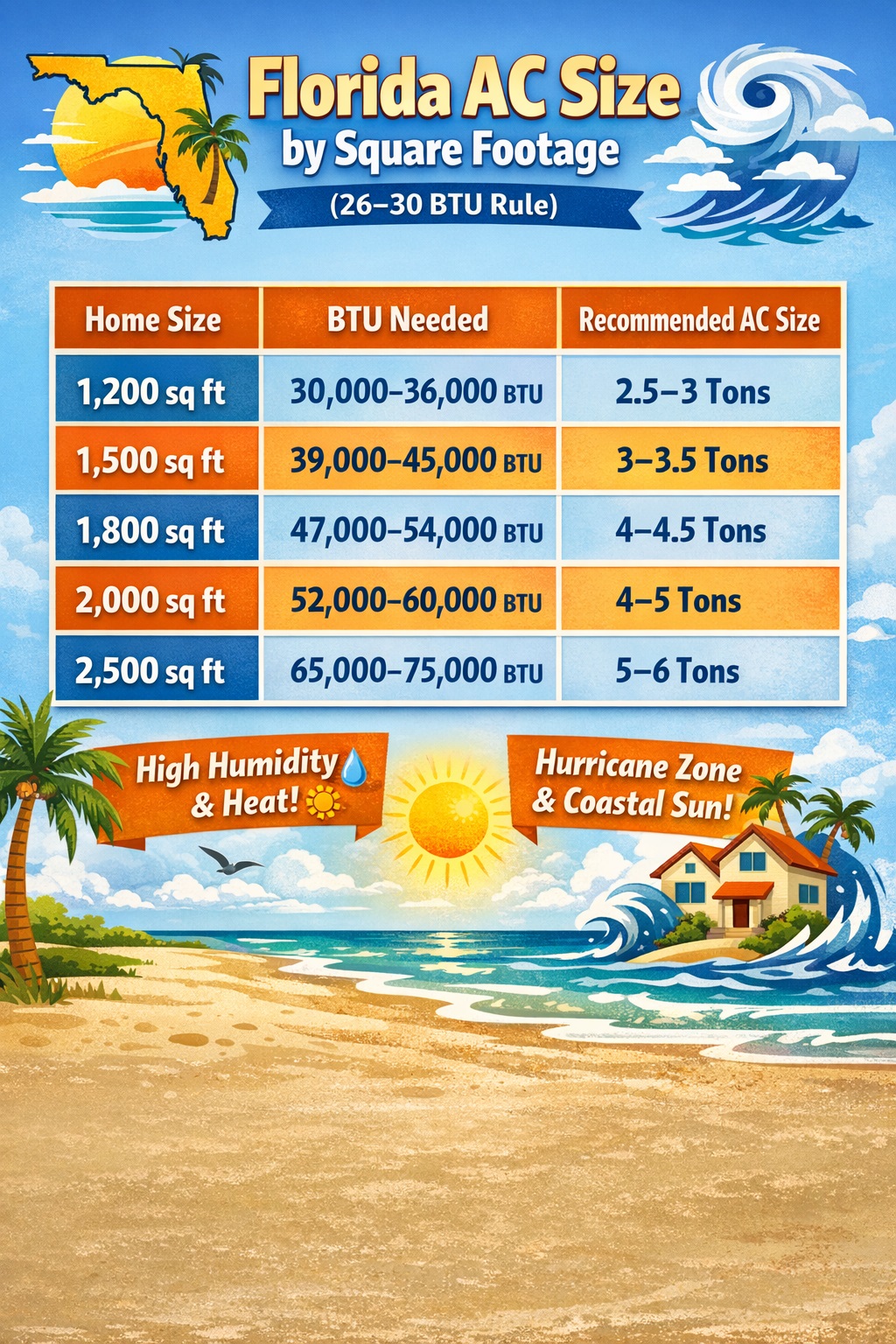
    Florida AC size chart showing BTU and tonnage recommendations by square footage

    What Size AC Do I Need in Florida? (BTU & Tonnage Guide โ€“ 2026)

    Florida is one of the toughest states in the country for air conditioning. High humidity, strong sun exposure, long cooling seasons, and warm nights make proper AC sizing especially important. If you are asking what size AC do I need in Florida, the answer is usually more aggressive than it would be in drier or cooler states.

    That is because Florida sizing is not just about temperature. It is about temperature plus moisture load.

    Quick Answer

    In Florida, most homes need about 26 to 30 BTU per square foot.

    That usually works out to:

    • 1,500 sq ft โ†’ 39,000โ€“45,000 BTU (about 3โ€“3.5 tons)
    • 2,000 sq ft โ†’ 52,000โ€“60,000 BTU (about 4โ€“5 tons)
    • 2,500 sq ft โ†’ 65,000โ€“75,000 BTU (about 5โ€“6 tons)

    Because Florida air is so humid, many homes end up sized toward the upper end of the tonnage range.

    If you need the basics first, read What Is BTU in Air Conditioning? and What Is a Ton in HVAC?.

    Why Florida homes need more cooling capacity

    Florida creates one of the most demanding HVAC environments in the U.S. for three main reasons:

    • high humidity
    • long cooling seasons
    • strong solar heat gain

    That means a house in Florida usually needs more cooling capacity than the same-size house in a cooler or drier climate.

    1. Humidity adds a major load

    In Florida, your AC is not just lowering the temperature. It is also removing a large amount of moisture from the indoor air.

    That means the system has to handle:

    • sensible heat โ†’ lowering temperature
    • latent heat โ†’ removing humidity

    This is one of the biggest reasons Florida homes often need more BTU than similar homes in dry states like Arizona or inland western areas.

    2. The cooling season is extremely long

    In many parts of Florida, air conditioning is not just a summer appliance. It is a near year-round necessity.

    In cities like Miami, Tampa, and Orlando, many systems:

    • run for 9 to 12 months per year
    • operate 10 to 14 hours per day in peak summer
    • get little relief at night because temperatures stay warm

    That extended runtime makes correct sizing even more important for operating cost and equipment life.

    3. Solar gain is intense

    Many Florida homes also have strong sun exposure, which increases cooling demand beyond simple square footage estimates.

    Common contributors include:

    • large sliding glass doors
    • west-facing windows
    • coastal sun exposure
    • concrete block construction that stores heat

    That solar load can push a borderline system into the next size range.

    Florida AC size chart by square footage

    Home SizeRecommended BTURecommended Tons
    1,200 sq ft30,000โ€“36,000 BTU2.5โ€“3 tons
    1,500 sq ft39,000โ€“45,000 BTU3โ€“3.5 tons
    1,800 sq ft47,000โ€“54,000 BTU4โ€“4.5 tons
    2,000 sq ft52,000โ€“60,000 BTU4โ€“5 tons
    2,500 sq ft65,000โ€“75,000 BTU5โ€“6 tons

    For the full national framework, see Air Conditioner Sizing Guide and AC Size Chart.

    How Florida compares with other states

    One reason homeowners get confused is that the same square footage can need very different AC sizes depending on the state.

    For example, a 2,000 sq ft home might need:

    • Michigan: around 3 tons
    • Texas: around 3.5 to 4 tons
    • Florida: often 4 to 5 tons

    That difference is mostly driven by humidity and year-round cooling demand.

    For comparison, see What Size AC Do I Need in Texas?.

    Should you oversize in Florida?

    This is one of the most common mistakes in humid climates.

    Many homeowners think:

    โ€œFlorida is brutally hot, so bigger must be better.โ€

    But oversizing can create serious problems, especially where humidity is high. An oversized AC may:

    • cool too quickly
    • shut off before removing enough moisture
    • leave the air feeling sticky or clammy
    • increase mold and mildew risk over time

    That is why in humid climates, a correctly sized system that runs longer can often feel better than a larger one that cools faster.

    For more on that, read Oversized AC Symptoms and AC Short Cycling Explained.

    What happens if you undersize in Florida?

    Florida can be just as unforgiving on the other side. A system that is too small may:

    • run constantly
    • struggle on 95ยฐF to 100ยฐF days
    • fail to control indoor humidity well enough
    • wear out faster from long runtimes

    For the warning signs, read Undersized AC Symptoms and Is My AC Too Small?.

    Two-story homes in Florida often need more than just extra tonnage

    In many two-story homes, the upstairs stays warmer and more humid than the downstairs. That happens because heat rises, upper floors trap moisture, and airflow between floors is often uneven.

    For homes above about 2,000 sq ft, it often makes sense to consider:

    • dual-zone systems
    • two separate systems
    • variable-speed compressors

    That can solve comfort problems more effectively than simply installing one oversized single-stage unit.

    You can compare against the broader national chart here: AC Size Chart.

    What SEER rating makes sense in Florida?

    Because Florida systems run so much of the year, efficiency matters a lot.

    A practical recommendation is:

    • minimum: SEER 16
    • better range: SEER 17โ€“19
    • best comfort option in many homes: variable-speed compressor

    Higher-efficiency systems cost more up front, but in Floridaโ€™s long cooling season they often make more sense than they would in cooler states.

    For cost context, read AC Installation Cost Per Square Foot and How Much Does a 5 Ton AC Unit Cost?.

    Ceiling height still matters in Florida

    Standard estimates assume 8-foot ceilings. If your Florida home has higher ceilings, the cooling load goes up because there is more air volume to condition.

    • 9โ€“10 ft ceilings: add about 10โ€“15% capacity
    • Vaulted ceilings: add about 15โ€“25%

    This is especially important in open Florida layouts with large living areas and tall ceilings.

    The most accurate way to size an AC in Florida

    Online formulas and rules of thumb are useful for getting into the right range, but Florida is one of the worst places to guess.

    The best method is a Manual J load calculation. That looks at:

    • window SHGC values
    • insulation quality
    • duct leakage
    • orientation
    • local weather data
    • air infiltration

    Because Florida humidity is so demanding, a professional load calculation is especially valuable here.

    For the full framework, read Air Conditioner Sizing Guide.

    Bottom line

    If you are asking what size AC do I need in Florida, a good general rule is to use 26 to 30 BTU per square foot and then adjust for humidity, ceiling height, solar exposure, and layout.

    In general:

    • 1,500 sq ft โ†’ about 3 to 3.5 tons
    • 2,000 sq ft โ†’ about 4 to 5 tons
    • 2,500 sq ft โ†’ about 5 to 6 tons

    The goal is not to install the biggest possible unit. In Florida, the best system is the one that controls humidity, runtime, airflow, and temperature all at the same time.

  • How Many BTU Do I Need? (AC Size Formula โ€“ 2026 Guide)

    Most homes need about 20 to 25 BTU per square foot, but the right number depends on more than floor area alone. Climate, ceiling height, and sun exposure can all push your cooling load higher. In hotter regions, some homes need up to 30 BTU per square foot.

    If you are asking how many BTU do I need, you are asking the right question. Correct BTU sizing is one of the biggest factors in comfort, humidity control, energy efficiency, and long-term AC performance.

    Choose too little BTU and the system may run constantly. Choose too much and you risk short cycling, weak humidity removal, and higher operating cost.

    Quick Answer

    To estimate how many BTU you need for your home:

    1. Multiply your square footage by the right BTU factor for your climate
    2. Adjust for ceiling height and sun exposure
    3. Divide the total BTU by 12,000 to estimate AC tonnage

    In most homes, the base estimate starts at 20โ€“25 BTU per square foot. In hotter and more humid climates, that can rise to 25โ€“30 BTU per square foot.

    Step 1: Use the standard BTU formula

    The basic formula looks like this:

    Square Footage ร— BTU Factor = Required BTU

    That gives you a rough cooling-load estimate before adjustments.

    Climate-based BTU factors

    Climate TypeBTU Per Sq Ft
    Cool / Northern18โ€“22 BTU
    Moderate20โ€“25 BTU
    Hot & Humid (TX, FL, AZ)25โ€“30 BTU

    The hotter and more humid the climate, the more cooling capacity your AC needs. That is because the system has to remove moisture as well as heat.

    For regional examples, compare What Size AC Do I Need in Texas?, What Size AC Do I Need in Florida?, and What Size AC Do I Need in California?.

    Example calculations

    Example 1: 1,500 sq ft in a moderate climate

    1,500 ร— 22 BTU = 33,000 BTU

    33,000 รท 12,000 = 2.75 tons

    Recommended size: 2.5 to 3 tons

    For the full version of this example, see What Size AC for 1500 Sq Ft House?.

    Example 2: 2,000 sq ft in a hot climate

    2,000 ร— 28 BTU = 56,000 BTU

    56,000 รท 12,000 = 4.6 tons

    Recommended size: 4.5 to 5 tons

    For a house-specific breakdown, read What Size AC for 2000 Sq Ft House?.

    Step 2: Adjust for ceiling height

    Most simple BTU formulas assume standard 8-foot ceilings. If your home has more air volume than that, the system usually needs more cooling capacity.

    • 9โ€“10 ft ceilings: add about 10โ€“15% BTU
    • Vaulted ceilings: add about 15โ€“25% BTU

    That is because cooling load depends on air volume, not just floor area.

    Step 3: Adjust for sun exposure

    Some homes absorb much more solar heat than others. A simple square-foot estimate may be too low if your house has:

    • large west-facing windows
    • minimal tree shade
    • dark roofing materials
    • strong afternoon sun

    In these cases, adding 5โ€“10% extra BTU is often reasonable.

    Step 4: Convert BTU to tonnage

    In HVAC, 1 ton = 12,000 BTU per hour. Once you estimate the total BTU, dividing by 12,000 gives you the approximate AC tonnage.

    Formula:

    Total BTU รท 12,000 = Required Tons

    Example:

    48,000 BTU รท 12,000 = 4 tons

    If you want the basic definitions behind that conversion, read What Is BTU in Air Conditioning? and What Is a Ton in HVAC?.

    What happens if you choose the wrong BTU?

    Getting close is not enough if you miss by too much. A system that is even half a ton off in the wrong direction can create noticeable comfort and efficiency problems.

    Too few BTU (undersized AC)

    An undersized air conditioner may:

    • run constantly
    • struggle during peak heat
    • raise energy bills
    • wear out the compressor faster

    See Undersized AC Symptoms and Is My AC Too Small?.

    Too many BTU (oversized AC)

    An oversized air conditioner may:

    • short cycle
    • leave humidity behind
    • create uneven temperatures
    • increase mold or mildew risk over time

    Read Oversized AC Symptoms and AC Short Cycling Explained.

    BTU chart by home size

    Home SizeModerate ClimateHot Climate
    600 sq ft12,000โ€“15,000 BTU15,000โ€“18,000 BTU
    1,000 sq ft20,000โ€“25,000 BTU25,000โ€“30,000 BTU
    1,500 sq ft30,000โ€“36,000 BTU37,000โ€“45,000 BTU
    2,000 sq ft36,000โ€“42,000 BTU50,000โ€“60,000 BTU
    2,500 sq ft48,000โ€“60,000 BTU62,000โ€“75,000 BTU
    3,000 sq ft60,000โ€“72,000 BTU75,000โ€“90,000 BTU

    For a full overview of size ranges, read Air Conditioner Sizing Guide and compare with the AC Size Chart.

    Is square footage enough?

    No. Square footage is only the starting point. Professionals use a Manual J load calculation because it considers the details that simple formulas miss.

    Manual J looks at:

    • insulation values
    • window efficiency
    • orientation
    • duct losses
    • air leakage
    • local climate data

    The BTU formula gives a strong estimate, but Manual J gives the final answer when equipment selection really matters.

    Bottom line

    If you are asking how many BTU do I need, the best starting method is simple:

    • multiply square footage by the right climate-based BTU factor
    • adjust upward for ceiling height and sun exposure
    • divide by 12,000 to estimate tonnage
    • confirm the result with Manual J for new installations

    Correct BTU sizing helps the AC hold a stable indoor temperature, control humidity, reduce wasted energy, and last longer. If you are replacing a system or installing central air for the first time, it is worth getting the number right before choosing a unit.

  • AC Size Calculator (BTU & Tonnage Estimator)

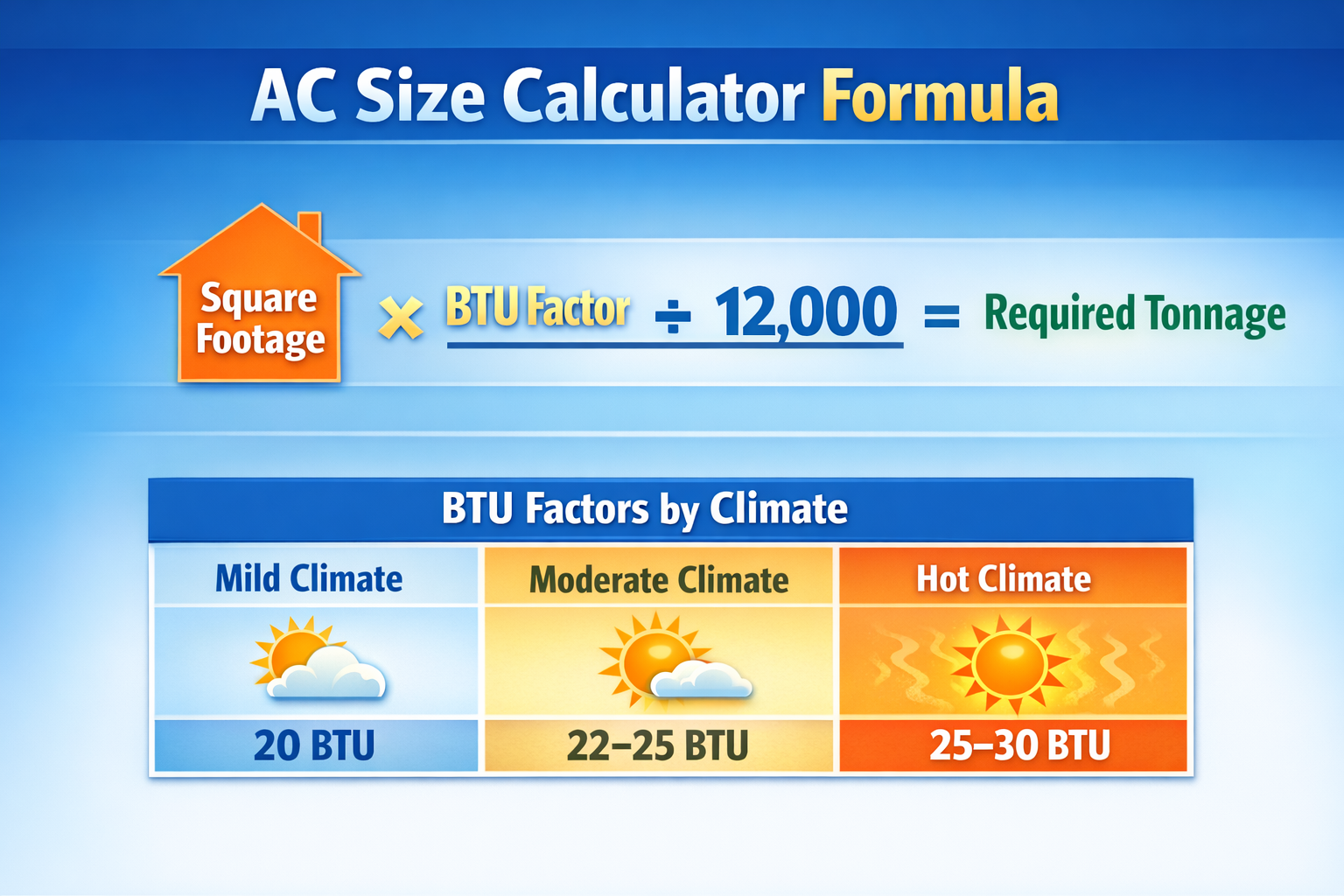
    Most homes require 20โ€“25 BTU per square foot. To calculate AC size, multiply your square footage by the appropriate BTU factor and divide by 12,000 to determine required tonnage.

    AC size calculator formula showing BTU per square foot and tonnage conversion chart

    AC Size Calculator (BTU & Tonnage Estimator for Any Home โ€“ 2026)

    Choosing the correct air conditioner size is one of the biggest factors in indoor comfort, energy efficiency, and long-term HVAC performance. This AC size calculator helps you estimate BTU capacity, AC tonnage, climate adjustments, and the airflow your system will need.

    If you are asking what size AC do I need, this page gives you a fast starting point before requesting contractor quotes or a full load calculation.

    Quick AC Size Calculator

    You can estimate AC size in two simple steps:

    Step 1: Multiply your homeโ€™s square footage by the appropriate BTU factor:

    • 20 BTU per sq ft for cool climates
    • 22โ€“25 BTU per sq ft for moderate climates
    • 25โ€“30 BTU per sq ft for hot and humid climates

    Step 2: Divide the total BTU by 12,000 to estimate tonnage.

    Example:

    2,000 sq ft home in a hot climate:
    2,000 ร— 28 BTU = 56,000 BTU
    56,000 รท 12,000 = 4.6 tons

    Recommended size: 4.5 to 5 tons

    If you want the broader sizing framework behind this estimate, read Air Conditioner Sizing Guide.

    AC Size Calculator Chart

    Home SizeMild ClimateModerate ClimateHot Climate
    600 sq ft12,000 BTU14,000 BTU15,000โ€“18,000 BTU
    1,000 sq ft20,000 BTU22,000โ€“25,000 BTU25,000โ€“30,000 BTU
    1,500 sq ft30,000 BTU33,000โ€“36,000 BTU37,000โ€“45,000 BTU
    2,000 sq ft36,000โ€“40,000 BTU40,000โ€“48,000 BTU50,000โ€“60,000 BTU
    2,500 sq ft48,000 BTU50,000โ€“60,000 BTU62,000โ€“75,000 BTU
    3,000 sq ft60,000 BTU66,000โ€“72,000 BTU75,000โ€“90,000 BTU

    For detailed size-specific guides, see:

    How BTU Converts to Tonnage

    In HVAC, 1 ton = 12,000 BTU per hour. That makes it easy to convert your estimated BTU load into system size.

    • 24,000 BTU = 2 tons
    • 36,000 BTU = 3 tons
    • 48,000 BTU = 4 tons
    • 60,000 BTU = 5 tons

    If these terms are new to you, read What Is BTU in Air Conditioning? and What Is a Ton in HVAC?.

    Climate Adjustment Guide

    Climate has a major effect on AC sizing. Two homes with the same square footage can need very different systems depending on heat and humidity.

    • Cool / Northern climates: 18โ€“22 BTU per sq ft
    • Moderate climates: 20โ€“25 BTU per sq ft
    • Hot & humid climates: 25โ€“30 BTU per sq ft

    Homes in high-humidity regions need extra cooling capacity because the system must remove both heat and moisture.

    For climate-specific examples, compare What Size AC Do I Need in Texas?, What Size AC Do I Need in Florida?, and What Size AC Do I Need in California?.

    Ceiling Height Adjustment

    Most online size calculators assume standard 8-foot ceilings. If your home has more air volume than that, the estimate needs to be adjusted upward.

    • 9โ€“10 ft ceilings: add about 10โ€“15% capacity
    • Vaulted ceilings: add about 15โ€“25%

    That is why open great rooms, loft layouts, and tall ceilings often need more cooling than the square footage alone would suggest.

    Airflow Requirement (CFM Calculator)

    Correct airflow is just as important as correct tonnage. A common HVAC rule is:

    400 CFM per ton

    That means:

    • 3 ton AC โ†’ about 1,200 CFM
    • 4 ton AC โ†’ about 1,600 CFM
    • 5 ton AC โ†’ about 2,000 CFM

    If the duct system cannot handle that airflow, cooling performance drops and the blower has to work harder. For more on this, read How Many CFM Per Ton?.

    What Happens If You Choose the Wrong Size?

    An AC calculator is useful because incorrect sizing creates expensive problems on both sides.

    If the AC is too big

    An oversized air conditioner may:

    • short cycle
    • leave humidity behind
    • create uneven room temperatures
    • raise electricity bills

    Learn more in Oversized AC Symptoms and AC Short Cycling Explained.

    If the AC is too small

    An undersized unit may:

    • run almost continuously
    • struggle in peak afternoon heat
    • stress the compressor
    • cost more over time than expected

    For that side of the problem, read Undersized AC Symptoms and Is My AC Too Small?.

    Manual J vs Online AC Calculator

    This AC size calculator is a strong starting point, but it is still an estimate. HVAC professionals use a Manual J load calculation to choose the final system size.

    Manual J considers:

    • insulation levels
    • window efficiency
    • home orientation
    • air leakage
    • duct losses
    • local climate data

    If you are installing a new central air system, replacing equipment near the edge of a size range, or dealing with comfort issues already, a Manual J calculation is worth requesting.

    When One Large Unit Isnโ€™t the Best Answer

    Homes above about 2,500 to 3,000 sq ft may perform better with:

    • dual systems
    • zoned HVAC setups
    • two-stage or variable-speed compressors

    That is especially true in two-story homes or floor plans with hot upstairs rooms. In those cases, layout and zoning can matter more than simply choosing the biggest available unit.

    Bottom Line

    Use this AC size calculator to get into the right range fast:

    • multiply square footage by the right climate-based BTU factor
    • divide by 12,000 for tonnage
    • adjust for ceiling height and humidity
    • confirm the final result with Manual J

    Correct AC sizing improves indoor comfort, lowers energy waste, protects equipment life, and helps the system control humidity properly. If you are not sure where to start, begin with your homeโ€™s square footage, climate zone, and whether the house has standard or high ceilings.

  • What Size AC Do I Need in Texas? (BTU & Tonnage Guide)

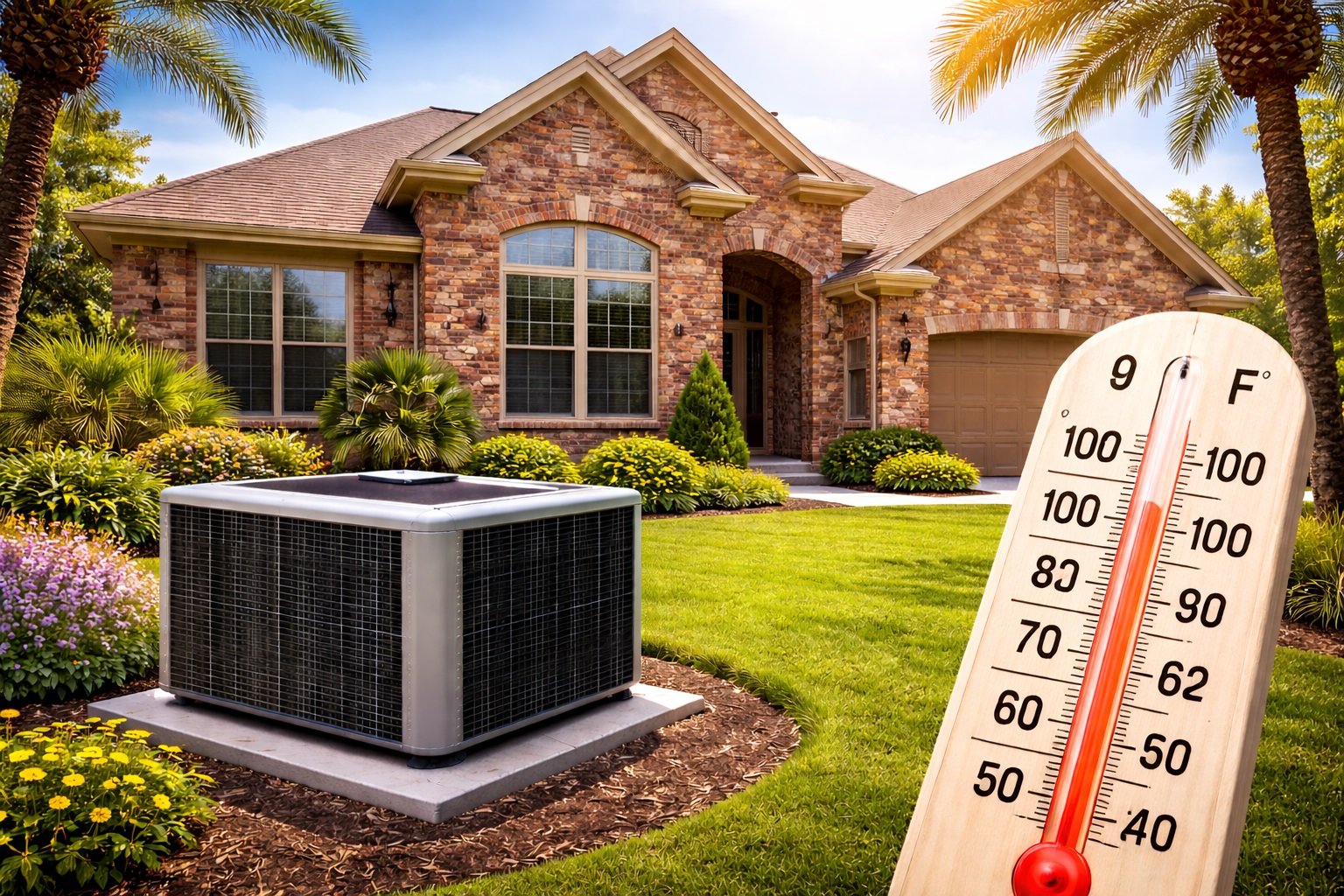
    Texas home with outdoor AC unit during extreme summer heat

    What Size AC Do I Need in Texas? (BTU & Tonnage Guide for Extreme Heat โ€“ 2026)

    Texas summers put far more stress on an air conditioner than many homeowners expect. In much of the state, long stretches of intense heat combine with humidity, strong sun exposure, and heavy attic heat gain. Because of that, AC sizing in Texas usually requires more cooling capacity than the same house would need in a cooler state.

    If you are asking what size AC do I need in Texas, the short answer is that most homes should be sized closer to 25 to 30 BTU per square foot, not the lower ranges often used in mild climates.

    Quick Answer

    Most Texas homes need about 25โ€“30 BTU per square foot.

    That usually works out to:

    • 1,500 sq ft โ†’ 37,500โ€“45,000 BTU (about 3โ€“3.5 tons)
    • 2,000 sq ft โ†’ 50,000โ€“60,000 BTU (about 4โ€“5 tons)
    • 2,500 sq ft โ†’ 62,500โ€“75,000 BTU (about 5โ€“6 tons)

    In hotter and more humid parts of Texas, it is usually safer to lean toward the upper end of the tonnage range.

    If you need the basics first, read What Is BTU in Air Conditioning? and What Is a Ton in HVAC?.

    Why AC sizing in Texas is different

    Texas is not a mild-climate state where a simple rule of thumb always works. In many areas, cooling systems have to deal with:

    • long hot summers
    • extended 95ยฐF to 105ยฐF outdoor temperatures
    • high humidity in many regions
    • strong afternoon sun
    • heavy attic heat load

    That means a home in Texas often needs more cooling capacity than the same-size home in a northern or coastal climate.

    Texas is not one climate zone

    The right AC size depends heavily on where you are in the state. Heat load in Houston is not the same as heat load in Dallas or El Paso.

    North Texas (Dallasโ€“Fort Worth)

    North Texas gets long hot summers, frequent 95ยฐF+ days, and moderate humidity. Homes in this region often need around 25โ€“27 BTU per square foot.

    A typical 2,000 sq ft home in this area often lands around 4 to 4.5 tons.

    Gulf Coast (Houston, Galveston)

    This is one of the toughest cooling environments in Texas because humidity stays high for long periods. In these areas, many homes need around 27โ€“30 BTU per square foot.

    A 2,000 sq ft home in Houston often needs about 4.5 to 5 tons.

    Humidity makes a major difference because the system is not only removing heat. It is also removing moisture.

    Central Texas (Austin, San Antonio)

    Central Texas usually falls in the middle, with strong summer heat and mixed humidity. A practical estimate is often around 26โ€“28 BTU per square foot.

    That puts many 2,000 sq ft homes in the 4 to 4.5 ton range.

    West Texas (El Paso)

    West Texas is hot, but much drier. Because humidity is lower, cooling load can be slightly lower than Gulf Coast areas even when outdoor temperatures are very high.

    Many homes in this part of Texas fall closer to 24โ€“26 BTU per square foot.

    Texas AC size chart

    Home SizeBTU RangeRecommended Tonnage
    1,200 sq ft30,000โ€“36,0002.5โ€“3 tons
    1,500 sq ft37,500โ€“45,0003โ€“3.5 tons
    1,800 sq ft45,000โ€“54,0003.5โ€“4.5 tons
    2,000 sq ft50,000โ€“60,0004โ€“5 tons
    2,500 sq ft62,500โ€“75,0005โ€“6 tons
    3,000 sq ft75,000โ€“90,0006โ€“7.5 tons

    For home-size-specific guides, see:

    Real example: 2,000 sq ft home in Houston

    Letโ€™s say you are estimating a 2,000 sq ft house in a hot and humid part of Texas.

    2,000 ร— 28 BTU = 56,000 BTU

    56,000 รท 12,000 = 4.6 tons

    That puts the recommended range at about 4.5 to 5 tons.

    If you tried to cool that same home with only a 3.5 ton unit, the system might:

    • run constantly
    • struggle in late afternoon heat
    • increase energy bills
    • place extra strain on the compressor

    For those warning signs, read Undersized AC Symptoms and Is My AC Too Small?.

    What happens if you oversize in Texas?

    Texas heat makes many homeowners want to go as large as possible. That can be a mistake, especially in humid parts of the state.

    An oversized AC may:

    • cool too quickly
    • shut off before removing enough moisture
    • leave the air feeling sticky
    • increase mold or mildew risk over time

    This is especially common in Houston-area climates, where humidity control is just as important as temperature reduction.

    For more on that, read Oversized AC Symptoms and AC Short Cycling Explained.

    Two-story homes in Texas need special attention

    Many Texas homes are two-story suburban layouts, and these often have a recurring problem: the upstairs stays hotter than the downstairs, even when the total system size looks reasonable on paper.

    That usually happens because:

    • heat rises
    • upper floors trap warm air
    • return ducts are too limited
    • airflow between floors is unbalanced

    In homes over about 2,200 sq ft, many HVAC professionals start considering:

    • dual systems
    • zoned HVAC setups
    • two-stage or variable-speed equipment

    That can work better than installing one oversized single system and hoping it solves everything.

    You can compare against the broader national chart here: AC Size Chart.

    What SEER rating makes sense in Texas?

    Because Texas cooling seasons can last 7 to 9 months in many areas, efficiency matters more here than in cooler states.

    A practical rule is:

    • minimum: SEER 16
    • better target: SEER 17โ€“19

    Higher-SEER equipment costs more up front, but in a state with long cooling seasons, it can lower electricity costs enough to matter.

    For more on that, read SEER Rating Explained and AC Installation Cost Guide.

    Should you rely on an online estimate in Texas?

    An online BTU estimate is helpful for getting into the right range, but Texas is one of the places where guessing can get expensive fast.

    A proper Manual J load calculation looks at:

    • window exposure
    • insulation quality
    • attic heat gain
    • duct losses
    • orientation
    • local weather data

    That matters because two Texas homes with the same square footage can need different equipment sizes based on layout and exposure alone.

    For the full sizing framework, read Air Conditioner Sizing Guide.

    Bottom line

    If you are asking what size AC do I need in Texas, the safest general rule is to use 25 to 30 BTU per square foot and then adjust upward for humidity, ceiling height, sun exposure, and two-story layouts.

    In general:

    • 1,500 sq ft โ†’ about 3 to 3.5 tons
    • 2,000 sq ft โ†’ about 4 to 5 tons
    • 2,500 sq ft โ†’ about 5 to 6 tons

    The goal is not just maximum power. It is balanced cooling, humidity control, and a system that can survive Texas summers without wasting energy or wearing out early.

  • AC Size Chart (BTU & Tonnage by Square Footage) โ€“ 2026 Guide

    Choosing the correct air conditioner size is one of the most important decisions for comfort, efficiency, and long-term system performance. The wrong size can create humidity problems, higher utility bills, short cycling, and uneven cooling.

    This guide gives you a practical AC size chart by square footage, along with BTU ranges, tonnage estimates, airflow requirements, and the key adjustments that change the answer in real homes.

    Quick Answer: How Big Should Your AC Be?

    Most homes need about 20 to 25 BTU per square foot. Since 1 ton = 12,000 BTU per hour, you can estimate AC size with a simple formula:

    Step 1: Square footage ร— 20โ€“25 BTU
    Step 2: Divide the result by 12,000

    For example:

    2,000 sq ft ร— 20 BTU = 40,000 BTU
    40,000 รท 12,000 = 3.3 tons

    That is why many 2,000 sq ft homes fall into the 3 to 3.5 ton range. For the detailed version, see What Size AC for 2000 Sq Ft House.

    Complete AC Size Chart by Square Footage

    Home Size (Sq Ft)BTU RangeRecommended Tonnage
    60012,000โ€“15,0001 โ€“ 1.25 Ton
    1,00020,000โ€“25,0001.5 โ€“ 2 Ton
    1,50030,000โ€“36,0002.5 โ€“ 3 Ton
    2,00036,000โ€“42,0003 โ€“ 3.5 Ton
    2,50048,000โ€“60,0004 โ€“ 5 Ton
    3,00060,000โ€“72,0005 โ€“ 6 Ton
    3,50070,000โ€“85,0005.5 โ€“ 7 Ton
    4,00080,000โ€“96,0006.5 โ€“ 8 Ton

    For detailed size-specific guides, you can also read:

    BTU vs Tonnage Explained

    In HVAC, BTU measures how much heat an air conditioner can remove per hour, while tonnage is another way of expressing the same cooling capacity.

    • 1 Ton = 12,000 BTU
    • 2 Ton = 24,000 BTU
    • 3 Ton = 36,000 BTU
    • 5 Ton = 60,000 BTU

    โ€œTonโ€ does not refer to weight. It refers to cooling output. If you are new to these terms, read What Is BTU in Air Conditioning? and What Is a Ton in HVAC?.

    Climate Adjustment Chart

    Square footage is only the starting point. Climate can shift the required AC size up or down significantly.

    Climate TypeRecommended BTU per Sq Ft
    Cool / Northern18โ€“22 BTU
    Moderate20โ€“25 BTU
    Hot & Humid25โ€“30 BTU

    Example:

    2,000 sq ft in a hot climate at 28 BTU per sq ft:
    2,000 ร— 28 = 56,000 BTU
    โ‰ˆ 4.5 tons

    That is why homes in hot states can need noticeably larger systems than homes with the same square footage in milder regions. See What Size AC Do I Need in Texas?, What Size AC Do I Need in Florida?, and What Size AC Do I Need in California?.

    Airflow Requirements (CFM Chart)

    Even if the tonnage looks correct, the system still needs enough airflow to perform properly. A standard HVAC rule is:

    400 CFM per ton

    TonnageRequired Airflow
    2 Ton800 CFM
    3 Ton1,200 CFM
    4 Ton1,600 CFM
    5 Ton2,000 CFM
    6 Ton2,400 CFM

    If the ductwork cannot support the needed airflow, performance drops. That is why duct design can matter as much as tonnage. For more on that, read How Many CFM Per Ton?.

    Ceiling Height Adjustment

    Most AC sizing charts assume standard 8-foot ceilings. If your ceilings are higher, the home contains more air volume and usually needs more cooling capacity.

    • 9โ€“10 ft ceilings: add about 10โ€“15% capacity
    • Vaulted ceilings: add about 15โ€“25% capacity

    This is one reason open-concept homes and tall great rooms often need more than square footage alone would suggest.

    Oversized vs Undersized AC Units

    Choosing the wrong size does not just affect temperature. It changes humidity control, runtime, comfort consistency, and equipment wear.

    Oversized systems may cause:

    • short cycling
    • poor humidity control
    • higher electricity bills
    • extra compressor wear

    Learn more in Oversized AC Symptoms and AC Short Cycling Explained.

    Undersized systems may:

    • run continuously
    • struggle during peak heat
    • increase energy costs
    • wear out faster

    See Undersized AC Symptoms and Is My AC Too Small?.

    AC Size Chart vs Manual J Calculation

    This AC size chart gives you a reliable estimate, but it is still only an estimate. Professional HVAC contractors use a Manual J load calculation for final sizing.

    Manual J considers:

    • insulation R-values
    • window efficiency and SHGC
    • orientation
    • air leakage
    • duct losses
    • local climate data

    For new installations, major replacements, or borderline sizing decisions, Manual J is the safest way to avoid costly mistakes.

    Installation Cost by AC Size

    Larger systems cost more to install, not just because the equipment is bigger, but because the airflow, ductwork, and electrical demands also increase.

    Typical installed ranges:

    • 2โ€“3 Ton: $5,500โ€“$10,000
    • 4โ€“5 Ton: $8,500โ€“$16,000
    • 6+ Ton: $12,000โ€“$20,000+

    For more detail, compare How Much Does a 3 Ton AC Unit Cost?, How Much Does a 5 Ton AC Unit Cost?, and AC Installation Cost Per Square Foot.

    When One Large Unit Isnโ€™t Ideal

    In homes above 3,000 sq ft, a single large unit is not always the best design. Many larger homes perform better with:

    • dual AC systems
    • zoned HVAC systems
    • two-stage or variable-speed equipment

    That is especially true in two-story homes, wide-open floor plans, and houses with persistent upstairs heat problems.

    For a related comparison, read 3 Ton vs 3.5 Ton AC โ€“ Which One Should You Choose?.

    Quick AC Size Formula (Fast Estimate)

    If you want a quick estimate without reading the full chart, use this:

    1. Multiply square footage ร— 20โ€“25
    2. Divide the result by 12,000
    3. Adjust for climate and ceiling height

    If you want a faster tool, use the AC Size Calculator or the detailed How Many BTU Do I Need? guide.

    Frequently Asked Questions

    How many BTU per square foot do I need?

    Most homes need about 20โ€“25 BTU per square foot, though hot climates may require up to 30 BTU per square foot.

    Is a bigger AC unit better?

    No. Oversized AC systems can short cycle, leave humidity behind, and create comfort problems.

    How do I convert BTU to tons?

    Divide total BTU by 12,000. For example, 36,000 BTU รท 12,000 = 3 tons.

    Does ceiling height affect AC size?

    Yes. Higher ceilings increase total air volume and often require additional capacity.

    Final Recommendation

    This AC size chart gives you a practical, data-based overview of BTU requirements, tonnage recommendations, airflow needs, climate adjustments, and installation cost expectations.

    Correct AC sizing helps improve:

    • indoor comfort
    • energy efficiency
    • humidity control
    • equipment lifespan

    Before installing a new air conditioning system, always confirm final sizing with a professional Manual J load calculation.